
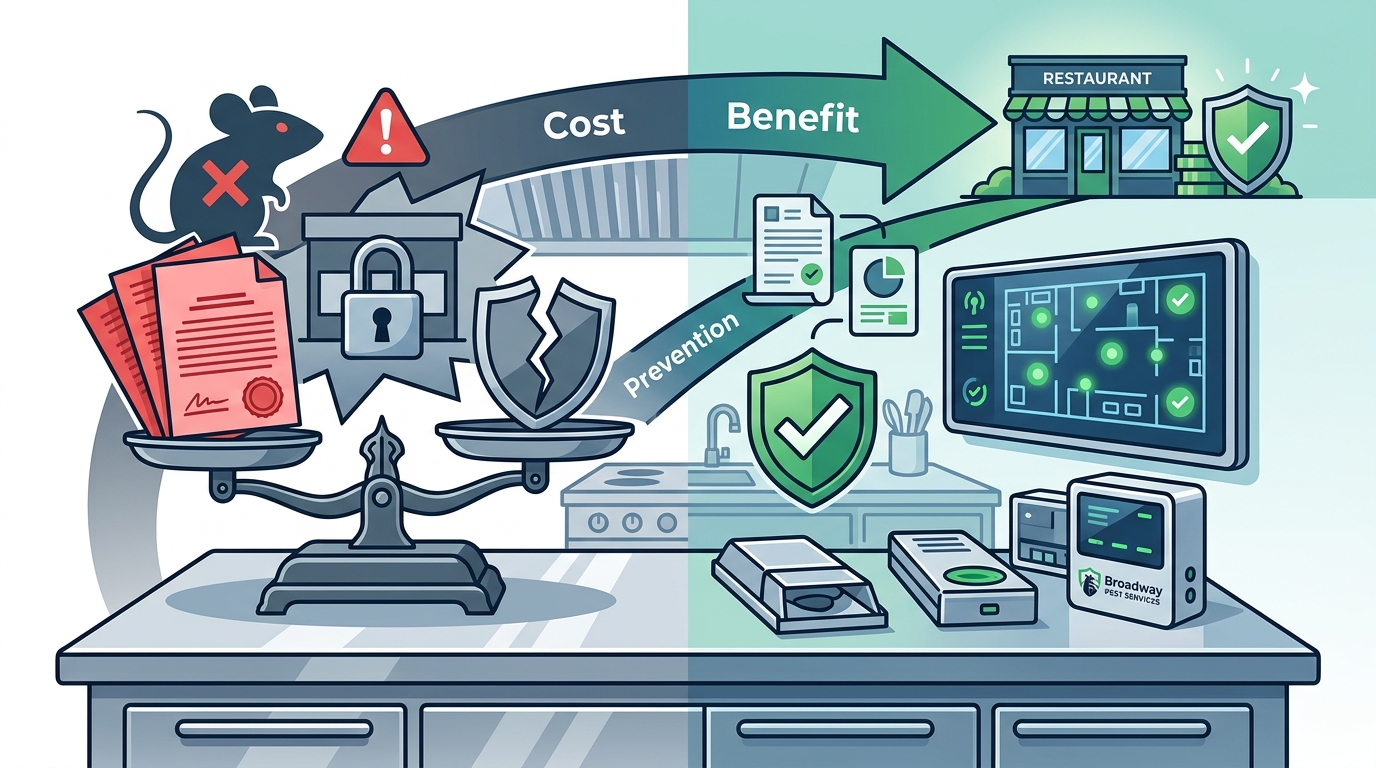
Rodent Prevention Cost-Benefit Analysis for NYC Restaurant Kitchens
Health code violations in New York City are not merely administrative hurdles; they are existential threats to culinary businesses. According to recent NYC Department of Health and Mental Hygiene (DOHMH) data, rodents are cited in over 30% of all critical health code violations in the restaurant sector. This statistic underscores a harsh reality: ignoring proactive pest management is a financial liability that compounds daily. The cost of a single closure can exceed the annual budget of a comprehensive prevention system. Understanding the return on investment for rodent exclusion is essential for owners who want to protect their reputation and bottom line. (Contact Us)
The Financial Impact of Infestations
Rodent infestations trigger a cascade of financial losses that extend far beyond the cost of extermination. When a health inspector discovers evidence of mice or rats, the immediate consequence is often a temporary closure of the establishment. For a mid-sized NYC restaurant, losing even three days of revenue can wipe out a month's profit margin. Furthermore, the cost of remediation includes deep cleaning, structural repairs, and potential legal fees if customers fall ill.
Beyond direct costs, the reputational damage is severe. In the age of social media, a single viral video of a pest in a kitchen can destroy a brand's credibility overnight. Prevention is significantly cheaper than remediation. By investing in structural integrity and proactive monitoring, restaurant owners can avoid the catastrophic financial shocks associated with active infestations. The goal is to shift from reactive spending to strategic asset protection.
Core Prevention Systems Explained
Effective rodent prevention is not a single product but a layered defense strategy. Broadway Exterminating utilizes a multi-tiered approach that addresses entry points, attractants, and monitoring. Understanding these components is vital for calculating accurate ROI.
Structural Exclusion
Exclusion involves sealing every potential entry point. Rodents can squeeze through gaps as small as a dime. This process requires steel wool, copper mesh, and industrial-grade sealants. Broadway Exterminating specializes in professional rodent exclusion services that identify hidden gaps in foundations, utility penetrations, and ventilation shafts. This is a one-time capital expense that provides long-term protection.
Sanitation and Waste Management
Sanitation is the operational side of prevention. Rodents are attracted to food residues and accessible waste. Implementing strict waste management protocols, including sealed dumpsters and regular deep cleaning of grease traps, removes the food source. Restaurant pest control guidelines emphasize that sanitation alone is insufficient without physical barriers, but the combination is lethal to pest populations.
Monitoring and Detection
Early detection is the key to minimizing damage. Modern monitoring systems use digital sensors and smart traps that alert staff via mobile devices when activity is detected. This allows for immediate intervention before an infestation becomes established. Regular inspections by certified professionals provide an unbiased assessment of risk areas.
Cost-Benefit Analysis Framework
To make an informed decision, restaurant owners must compare the costs of prevention against the potential costs of inaction. The following table outlines a typical cost-benefit scenario for a medium-sized NYC restaurant.
| Category | Prevention System (Annual) | Reactive Infestation Response |
|---|---|---|
| Service Costs | $2,400 - $4,800 | $5,000 - $15,000+ |
| Structural Repairs | $1,000 - $3,000 (One-time) | $10,000 - $50,000+ |
| Lost Revenue (Closure) | $0 | $15,000 - $100,000+ |
| Reputation/Legal Risk | Negligible | High/Unquantifiable |
| Total Estimated Cost | $3,400 - $7,800 | $30,000 - $165,000+ |
The data clearly shows that prevention costs a fraction of reactive measures. NYC Department of Health regulations mandate strict compliance, meaning fines for violations can add thousands to the reactive cost. Prevention systems offer a predictable, manageable expense that protects the business from unpredictable, catastrophic losses.
Regulatory Compliance and Insurance
Compliance with local health codes is non-negotiable. The DOHMH requires restaurants to maintain a pest-free environment. Failure to comply can result in point deductions on health inspections, which directly impact the restaurant's rating and ability to operate. A poor health rating can reduce customer traffic by up to 20%.
Insurance providers also view pest management records closely. A documented prevention program can lower premiums or prevent policy cancellations. Conversely, a history of infestations may lead to increased liability premiums or denial of coverage for related claims. Broadway Exterminating provides detailed service reports that serve as proof of due diligence, which is invaluable during insurance audits or legal disputes.
Implementation Strategy
Implementing a rodent prevention system requires a phased approach. First, conduct a comprehensive inspection to identify vulnerabilities. This should include a review of the building's exterior, utility lines, and interior storage areas. Next, prioritize structural exclusions to seal entry points. This is the most critical step in long-term prevention.
Following exclusion, establish a routine monitoring schedule. This includes regular checks of bait stations, digital traps, and high-risk areas like dry storage and mechanical rooms. Train staff on sanitation protocols and how to report signs of pest activity immediately. Broadway Exterminating offers customized training programs for kitchen staff to ensure everyone plays a role in prevention.
Key Takeaways
- Rodents are cited in over 30% of NYC health code violations, making prevention a regulatory necessity.
- The average cost of reactive infestation response exceeds $30,000 when including lost revenue and repairs.
- Structural exclusion is a one-time investment that provides the highest long-term ROI.
- Digital monitoring systems allow for real-time detection, reducing damage potential.
- Documented prevention programs can lower insurance premiums and protect against liability.
- Health inspection ratings directly impact customer traffic and revenue.
- Staff training is essential for maintaining sanitation standards between professional visits.
Frequently Asked Questions
How often should a restaurant undergo rodent prevention inspections?
Restaurants should undergo professional inspections at least quarterly. High-risk establishments may require monthly visits. Regular inspections ensure that new entry points are identified and sealed before rodents can exploit them.
What is the most effective rodent exclusion material?
Steel wool and copper mesh are the most effective materials because rodents cannot chew through them. These should be combined with industrial-grade sealants or foam to create a permanent barrier.
Can I handle rodent prevention myself?
While basic sanitation can be managed in-house, structural exclusion and monitoring require professional expertise. DIY methods often fail to address hidden entry points, leading to recurring infestations.
How does rodent activity affect health inspection scores?
Any evidence of rodents results in critical violations that can lead to immediate closure or significant point deductions. A low health score can deter customers and damage the brand's reputation.
What is the ROI of a rodent prevention system?
The ROI is calculated by comparing the annual cost of prevention services against the potential costs of infestation, including lost revenue, repairs, and fines. Prevention typically offers a 10x to 20x return on investment by avoiding catastrophic losses.
Do prevention systems work for both rats and mice?
Yes, comprehensive prevention systems address the unique behaviors of both rats and mice. Exclusion techniques are tailored to the specific entry sizes and habits of each species.
How long does it take to implement a prevention system?
Initial implementation, including inspection and exclusion, can take one to two weeks. Ongoing monitoring and maintenance are continuous processes that require regular professional visits.
Secure Your Kitchen Today
Do not wait for a health violation to disrupt your business. Protect your restaurant's reputation and revenue with a proactive rodent prevention system. Contact Broadway Exterminating today to schedule a comprehensive inspection and customize a prevention plan tailored to your kitchen's unique needs.