
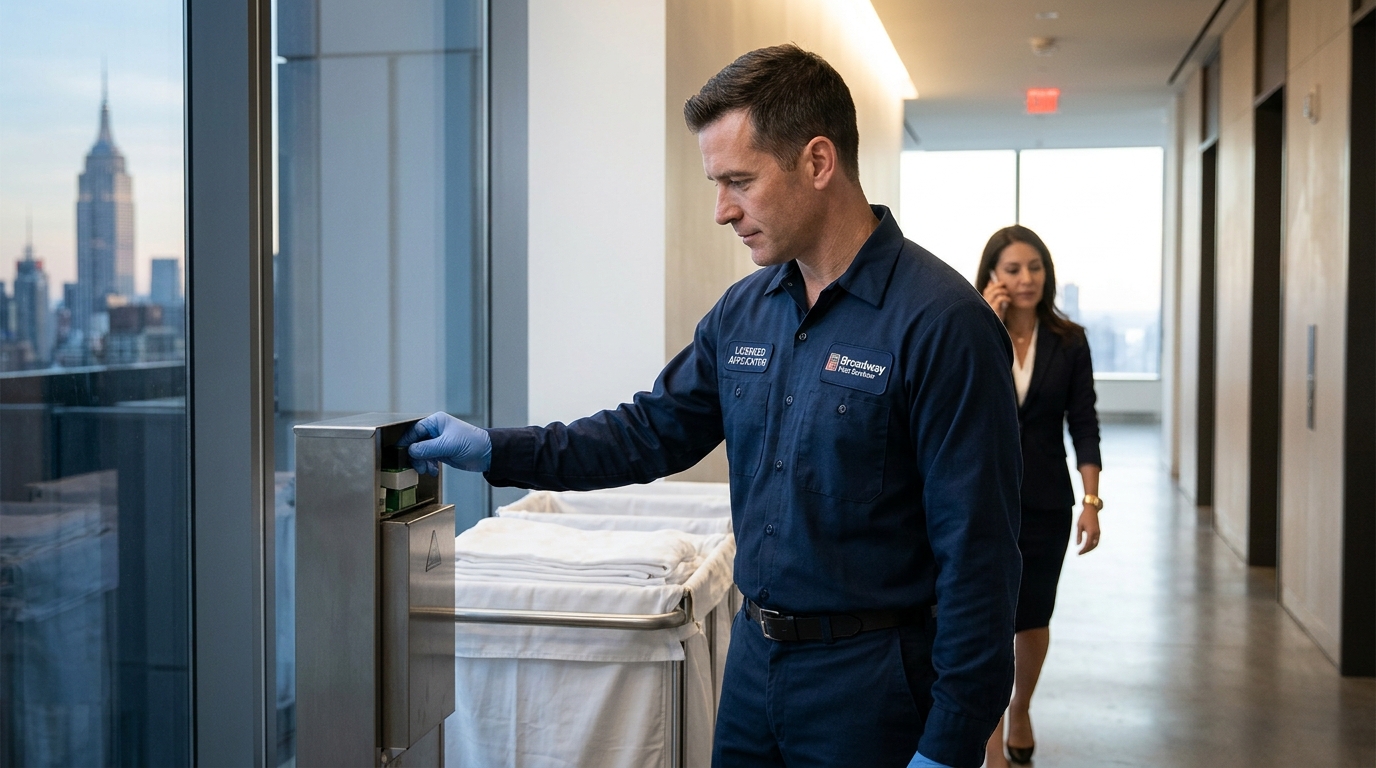
Why NYC Property Managers Must Hire Licensed Pest Control Applicators
NYC property managers must hire only licensed pest control applicators because New York State law requires it. Unlicensed individuals cannot legally apply pesticides in commercial buildings. The Department of Health and Mental Hygiene recommends using professionals licensed by New York State to ensure safety and compliance. Broadway Pest Services provides these compliant services to protect your building's reputation and tenant health. For additional details, review the Just a moment.
Legal Mandates for Commercial Pesticide Application
New York State law strictly regulates who can apply pesticides. Only licensed commercial applicators and technicians are permitted to apply pesticides on public and private property. This legal framework exists to protect public health and the environment. Unlicensed application is a violation that can result in significant fines and legal liability for building owners.
The Department of Health and Mental Hygiene emphasizes that building owners and tenants must prevent or address pest infestations. They specifically recommend that business owners use pest control professionals licensed by New York State. This recommendation aligns with state regulations that mandate licensing for any commercial pesticide application. Ignoring these mandates puts the property at risk of regulatory action.
For property managers, compliance is not optional. It is a legal requirement that protects the asset. Using unlicensed applicators can lead to violations that are difficult to resolve. Broadway Pest Services ensures that all technicians are properly licensed and trained to meet these state standards.
Health and Safety Standards in Multi-Family Buildings
Pesticide application in occupied buildings carries inherent risks. Licensed applicators are trained to handle chemicals safely and effectively. They understand how to minimize exposure to residents, staff, and the environment. This training is a core component of the state licensing process.
The NYC Department of Health provides specific guidance for building residents and tenants. It notes that some pesticides may only be used in a safe manner by licensed pest control professionals. This distinction is critical in dense urban environments like New York City. Proper application prevents accidental poisoning and ensures that chemical residues remain within safe limits.
Property managers have a duty of care to their tenants. Hiring licensed professionals demonstrates a commitment to tenant safety. It also provides a documented trail of professional service. Broadway Pest Services focuses on safe, effective treatments that protect both the building and its occupants.
Liability and Insurance Implications
Using unlicensed applicators creates significant liability risks for property managers. If an incident occurs, such as a chemical spill or tenant illness, the property owner may be held responsible. Insurance policies often exclude coverage for damages caused by unlicensed or unqualified workers. This can leave the property manager personally liable for substantial costs.
Licensed applicators carry their own professional liability insurance. They are also bound by state regulations that require safe handling and disposal of chemicals. This layer of protection shields the property owner from many potential claims. It ensures that any issues are handled by a qualified professional with the appropriate coverage.
Regulatory Compliance and Inspection Readiness
New York City buildings are subject to frequent inspections by various agencies. The Department of Buildings and the Department of Health both have roles in overseeing pest control compliance. Inspectors will check for proper licensing and documentation. Failure to produce proof of licensed service can result in violations and fines.
The NYC Department of Health encourages property owners to call 311 for information about pest management training. This resource helps owners understand their responsibilities. It also highlights the importance of working with licensed professionals. Being inspection-ready means having clear, accessible records of all pest control activities.
Property managers should establish a routine for reviewing pest control documentation. This ensures that all records are current and compliant. It also helps identify any gaps in coverage or documentation. Broadway Pest Services works with property managers to maintain inspection-ready records, reducing the risk of violations.
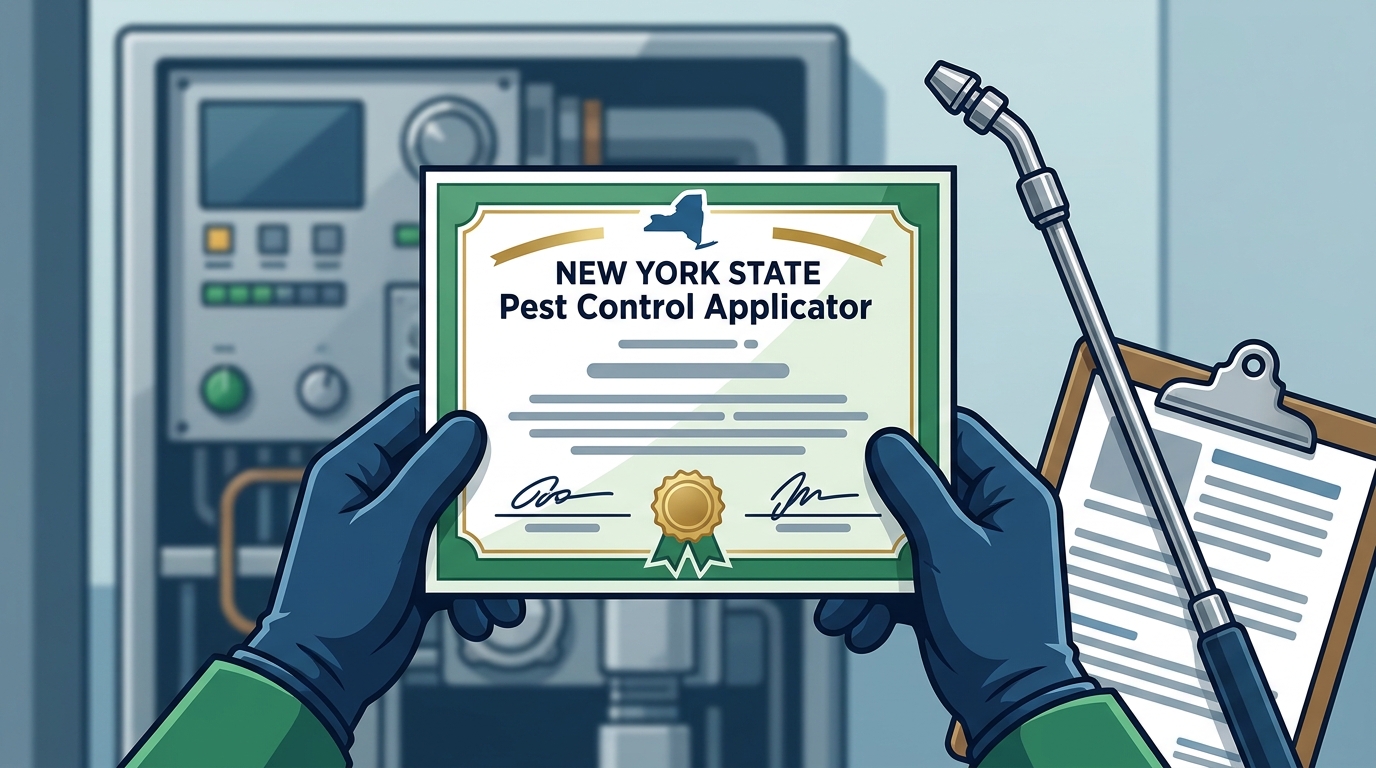
Choosing a Compliant Pest Control Partner
Selecting the right pest control partner is critical for long-term compliance. Property managers should verify the license status of any applicator before hiring. This can be done through the New York State Department of Agriculture and Markets. It is also wise to ask for proof of insurance and training. according to Pest Control Information
By partnering with a licensed provider, property managers can focus on their core responsibilities. They can trust that pest control is being handled by qualified professionals. This partnership ensures that the building remains safe, compliant, and well-maintained. Broadway Pest Services is committed to providing the highest standard of pest control in New York City.
Key Takeaways
- New York State law requires all commercial pesticide applicators to be licensed.
- The NYC Department of Health recommends using licensed professionals for pest control.
- Licensed applicators are trained in safe handling and application of pesticides.
- Using unlicensed applicators can void insurance coverage and create personal liability.
- Maintaining detailed records of licensed services is essential for inspection readiness.
- Property managers should verify license status and insurance before hiring any provider.
- Broadway Pest Services provides compliant, documented pest control for NYC buildings.
Frequently Asked Questions
Is it illegal to apply pesticides in a commercial building without a license?
Yes, New York State law prohibits unlicensed individuals from applying pesticides in commercial settings. Only licensed commercial applicators and technicians are permitted to perform these services.
What happens if a property manager hires an unlicensed applicator?
The property manager may face fines, legal liability, and potential insurance exclusions. It can also result in violations during city inspections.
How can I verify if a pest control applicator is licensed?
You can check the New York State Department of Agriculture and Markets database. You should also ask the provider for their license number and proof of insurance.
Does the NYC Department of Health require licensed applicators?
The Department of Health recommends using licensed professionals. While it is a state law requirement, the city strongly encourages compliance with these standards.
What documentation should I keep from my pest control provider?
Keep records of all services, including the applicator's license number, the date of service, and the specific treatments performed. This documentation is crucial for compliance and insurance purposes.
Can I use a DIY pest control product in a commercial building?
Some minor, non-chemical controls may be used, but any pesticide application in a commercial setting generally requires a licensed applicator. Always check specific product labels and state regulations.
Conclusion
Hiring licensed pest control applicators is a legal and practical necessity for NYC property managers. It ensures compliance with state and city regulations, protects tenant health, and mitigates liability risks. Broadway Pest Services provides the expertise and documentation you need to maintain a safe and compliant building. To discuss your pest control needs, .