
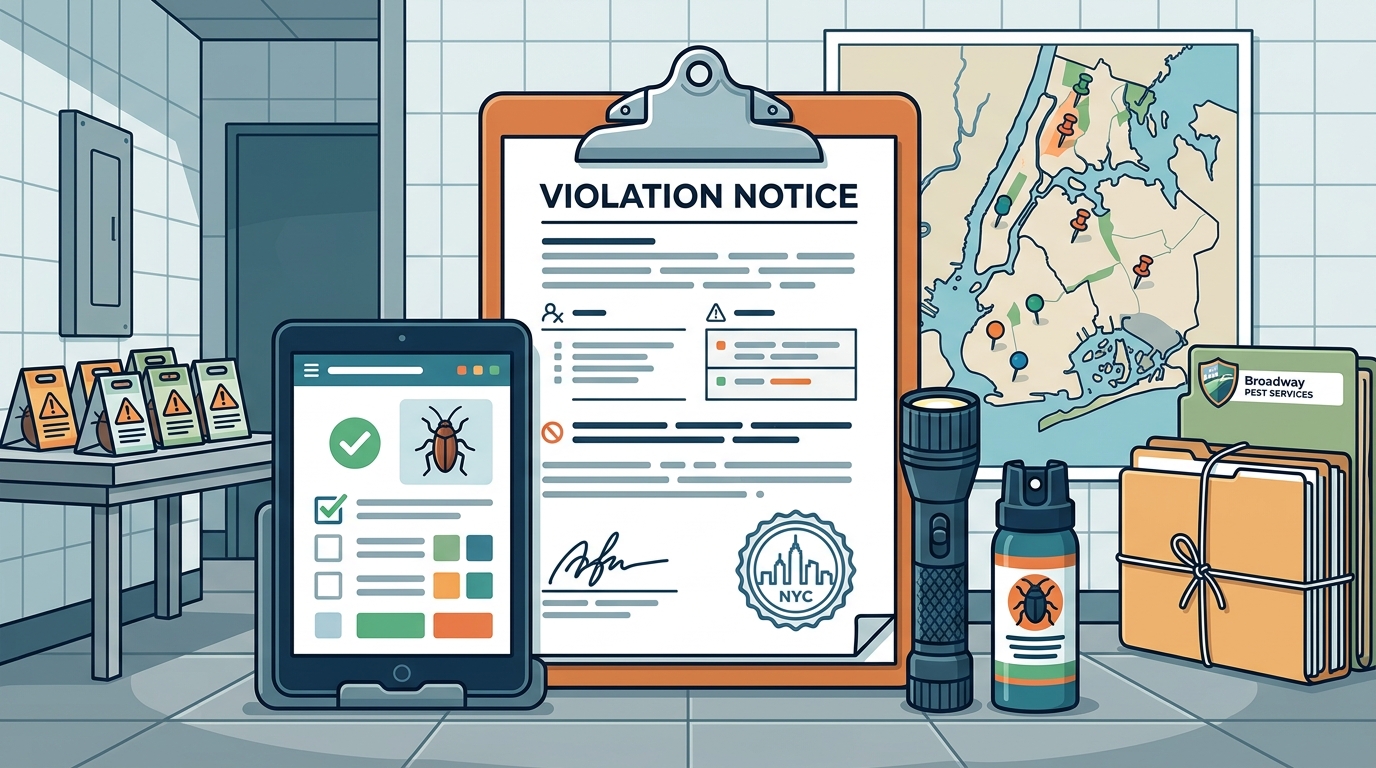
NYC landlords face a critical operational challenge when dealing with Housing Preservation and Development (HPD) cockroach violations. These citations are not merely administrative notices; they are precursors to significant financial penalties and potential legal action. According to recent municipal data, HPD issues thousands of cockroach violations annually across the five boroughs, with fines escalating rapidly for repeat offenders. Navigating this regulatory landscape requires more than just a standard extermination visit. It demands a strategic, documented, and compliant pest management approach that satisfies both the letter and the spirit of city housing codes. This guide evaluates the essential criteria for selecting a pest control partner capable of defending your property against these specific regulatory threats. (Broadway Pest Services Urban)
Understanding HPD Cockroach Violations
A cockroach violation from HPD is a formal citation indicating that a building fails to meet the Minimum Housing Code standards for pest control. These violations are typically triggered by tenant complaints or routine inspections. The presence of cockroaches is considered a health hazard, and HPD takes these citations seriously because they correlate with broader issues of building maintenance and structural integrity. (Broadway Pest Services Urban)
When a violation is issued, the landlord is given a specific timeframe to correct the issue. Failure to comply results in a Notice of Violation (NOV) and a corresponding fine. For commercial and multi-family residential properties, the stakes are even higher. A pattern of violations can lead to increased scrutiny from the Department of Buildings (DOB) and negatively impact the building's status in the city's housing database. Understanding the severity of these citations is the first step in selecting the right pest control partner. (NYC Pest Control FAQ)
Evaluating Service Providers for Compliance
Not all pest control companies are equipped to handle the complexities of HPD compliance. When evaluating options, landlords must look beyond price and focus on regulatory expertise. The right provider understands the specific codes that govern pest management in New York City and can provide the necessary documentation to defend against violations. (Broadway Pest Services Urban)
Regulatory Knowledge and Certification
First, verify the provider's certifications. Look for companies that are QualityPro certified and adhere to Integrated Pest Management (IPM) standards. IPM is a holistic approach to pest control that emphasizes long-term prevention and the use of minimal chemical treatments. This approach is not only more environmentally friendly but also aligns with modern regulatory expectations for tenant safety and building health.
Response Time and Availability
Speed is critical when dealing with HPD violations. A provider that offers same-day emergency response can make the difference between a minor correction and a major citation. In NYC, the ability to deploy technicians quickly to address active infestations is a key indicator of a company's operational capacity and commitment to client success.
Documentation and Reporting
Comprehensive documentation is the backbone of any HPD defense. Your pest control provider must offer detailed service logs that record every treatment, inspection, and recommendation. These logs serve as legal evidence that you have taken reasonable steps to control pests. Without this paper trail, it is difficult to prove compliance in the event of a hearing or legal challenge.
IPM vs. Traditional Methods
The choice between Integrated Pest Management (IPM) and traditional pest control methods is a critical decision for any property manager. IPM is defined as a sustainable approach to managing pests by combining biological, cultural, physical, and chemical tools in a way that minimizes economic, health, and environmental risks. Traditional methods, by contrast, often rely heavily on scheduled chemical applications without addressing the underlying causes of infestations.
The IPM Advantage
IPM focuses on identifying and eliminating the conditions that attract pests, such as food sources, water leaks, and entry points. This proactive strategy reduces the likelihood of recurring infestations and minimizes tenant disruption. For HPD compliance, IPM is preferred because it demonstrates a thorough and scientific approach to pest management, which is viewed favorably by city inspectors.
Limitations of Traditional Methods
Traditional pest control often involves routine spraying of pesticides, which can lead to chemical resistance in pest populations over time. This can result in ineffective treatments and the need for more aggressive interventions later. Additionally, heavy chemical use can raise concerns among tenants and regulatory bodies regarding safety and environmental impact.
Documentation and Legal Defense
In the event of an HPD violation, the quality of your documentation can determine the outcome of your case. Providers that offer 24/7 service logs and digital reporting tools ensure that you have real-time access to your property's pest management history. This transparency is crucial for building a strong defense against citations.
Building a Compliance File
Your compliance file should include all service reports, inspection records, and correspondence with the pest control provider. These documents should clearly show the timeline of actions taken to address the infestation. A well-organized file demonstrates diligence and can help mitigate fines or dismiss violations if the provider's work meets HPD standards.
Legal Support and Advocacy
Some pest control providers offer additional support in the form of legal advocacy or consultation. This can include assistance in preparing for HPD hearings or providing expert testimony regarding the effectiveness of the pest management program. Choosing a provider with this level of support can provide peace of mind and a stronger position in regulatory disputes.
Comparing NYC Pest Control Options
Selecting the right pest control partner requires a careful comparison of services, credentials, and compliance capabilities. The table below outlines key factors to consider when evaluating providers for HPD cockroach violation compliance.
| Criteria | Importance for HPD Compliance | Key Questions to Ask |
|---|---|---|
| IPM Certification | High | Are your technicians certified in IPM? How do you document IPM practices? |
| Response Time | Critical | Do you offer same-day emergency response? What is your average response time? |
| Digital Documentation | High | Do you provide 24/7 access to service logs? Are reports HPD-ready? |
| Regulatory Expertise | High | How do you stay updated on HPD and DOH regulations? Do you offer compliance consulting? |
| Service Area Coverage | Medium | Do you cover all five boroughs? What is your coverage in Westchester or Bergen County? |
When comparing providers, prioritize those that demonstrate a deep understanding of NYC's unique regulatory environment. Look for companies that have a proven track record of helping landlords navigate HPD violations and maintain compliance. Independent ownership and long-standing presence in the market can also be indicators of reliability and accountability.
Key Takeaways
- HPD Violations are Serious: Cockroach violations can lead to significant fines and legal action if not addressed promptly and effectively.
- IPM is Essential: Integrated Pest Management is the preferred method for compliance, focusing on prevention and minimal chemical use.
- Documentation is Defense: Detailed, digital service logs are critical for defending against HPD citations and proving compliance.
- Response Time Matters: Same-day emergency response capabilities are crucial for mitigating the impact of active infestations.
- Regulatory Expertise is Key: Choose a provider with specific knowledge of HPD, DOH, and DOB regulations.
- Independent Providers Offer Accountability: Independently owned companies often provide more consistent service and accountability compared to large, rolled-up entities.
- Compliance is Ongoing: Pest management is not a one-time event but a continuous process requiring regular monitoring and adjustment.
Frequently Asked Questions
What is an HPD cockroach violation?
An HPD cockroach violation is a formal citation issued by the New York City Housing Preservation and Development agency indicating that a property fails to meet the Minimum Housing Code standards for pest control. It signifies the presence of cockroaches that pose a health hazard to tenants.
How can I defend against an HPD cockroach violation?
Defending against an HPD violation requires comprehensive documentation of pest control efforts. This includes service logs, inspection reports, and evidence of timely corrective actions. Working with a pest control provider who understands HPD regulations and can provide HPD-ready documentation is essential for a strong defense.
What is Integrated Pest Management (IPM)?
IPM is a sustainable approach to managing pests by combining biological, cultural, physical, and chemical tools in a way that minimizes economic, health, and environmental risks. It focuses on long-term prevention and addressing the root causes of infestations rather than just treating symptoms.
Why is same-day response important for pest control?
Same-day response is critical because it allows for the rapid containment of active infestations, preventing them from spreading and worsening. Quick action can also demonstrate diligence to HPD, potentially mitigating fines or reducing the severity of citations.
Do I need a specialized pest control provider for HPD compliance?
Yes, standard pest control services may not be sufficient for HPD compliance. You need a provider with specific expertise in NYC housing codes, IPM practices, and regulatory documentation. A specialized provider can offer the strategic support needed to navigate the complexities of HPD regulations.
What types of properties are most at risk for HPD cockroach violations?
Multi-family residential buildings, commercial properties, and older housing stock are often at higher risk due to the complexity of pest management in these environments. Properties with a history of tenant complaints or previous violations are also more likely to face scrutiny from HPD.
How does Broadway Pest Services handle HPD compliance?
Broadway Pest Services specializes in tactical pest control for NYC commercial and residential properties. We provide documented IPM programs, same-day emergency response, and 24/7 digital service logs designed to hold up in any HPD proceeding. Our team is experienced in navigating DOH, HPD, and DOB regulations to protect your property and reputation.
Secure Your Property Compliance
Do not wait for an HPD violation to impact your property's value and tenant relations. Take proactive steps today by partnering with a pest control provider that understands the unique challenges of NYC commercial and residential compliance. Broadway Pest Services offers the expertise, documentation, and rapid response needed to defend your property against cockroach violations. Deploy a Free Assessment now to secure your property's future and ensure peace of mind for your tenants.