

Evaluating Commercial Pest Control Services in NYC: A Step-by-Step Guide for Property Managers
New York City presents a unique set of challenges for commercial property managers, where pest pressure is intensified by dense urban infrastructure and strict regulatory oversight. According to recent industry data, properties with documented Integrated Pest Management (IPM) programs reduce health code violations by over 60% compared to those relying on reactive treatments. This statistic highlights the critical importance of selecting a partner who understands the operational demands of NYC commercial real estate. Whether you manage a high-rise in Midtown, a restaurant in the East Village, or a construction site in Queens, the right pest control strategy is not just about extermination. It is about compliance, reputation management, and operational continuity. This guide outlines the essential steps for evaluating and selecting a commercial pest control service that aligns with your property's specific needs. (Broadway Pest Services Urban)
Understanding the NYC Regulatory Landscape
Before evaluating vendors, you must understand the regulatory environment they operate within. NYC is governed by a complex web of health codes, building department regulations, and industry-specific standards. Health Department (DOH) compliance is the most immediate concern for food service and hospitality sectors. A single violation can result in fines, temporary closure, or a drop in health grade, directly impacting revenue. For property managers, HPD (Housing Preservation and Development) violations are equally critical. These violations often stem from tenant complaints regarding pests, leading to costly inspections and mandatory remediation plans. (NYC Pest Control FAQ)
Furthermore, construction sites must adhere to DOB (Department of Buildings) Rodent Mitigation Plans before permits are issued. This requires proactive monitoring and documentation, not just reactive treatment. Healthcare and educational facilities face additional scrutiny under NYS Ed Law 409-h and Local Law 55, which mandate low-chemical approaches to protect vulnerable populations. A vendor who does not understand these distinctions cannot provide adequate protection. You need a partner who views pest control as a compliance tool, not just a service. (Broadway Pest Services Urban)
According to data from the NYC Department of Health and Mental Hygiene, restaurants with consistent pest management logs are significantly less likely to receive critical violations during inspections. This underscores the value of a vendor who prioritizes documentation and prevention over simple chemical application.
Assessing IPM Capabilities and Methodologies
Integrated Pest Management (IPM) is the gold standard for commercial pest control. But what exactly is IPM? IPM is a comprehensive, environmentally sensitive approach to pest control that relies on a combination of techniques, such as biological control, habitat manipulation, modification of cultural practices, and the use of resistant varieties, with pesticides used only after monitoring indicates they are needed according to established guidelines. This definition is crucial because it distinguishes professional, strategic pest management from the "spray and pray" methods used by less sophisticated providers.
When evaluating a vendor, ask specific questions about their IPM protocols. Do they conduct regular inspections to identify entry points and harborage areas? Do they use targeted baiting systems rather than broad-spectrum sprays? Do they provide recommendations for structural repairs to prevent future infestations? A robust IPM program is proactive. It aims to eliminate the conditions that attract pests, rather than just killing the pests that are already present.
For example, in food processing facilities, IPM must align with FDA, USDA, and FSMA (Food Safety Modernization Act) standards. This requires zero tolerance for pests and rigorous documentation of all activities. In contrast, office buildings may focus more on tenant satisfaction and minimizing disruption. The right vendor will tailor their IPM strategy to your specific sector, ensuring that the methods used are both effective and appropriate for your environment.
Evaluating Emergency Response and Availability
Pest emergencies do not adhere to a 9-to-5 schedule. A bed bug outbreak in a hotel or a rodent infestation in a restaurant kitchen can cause immediate and severe reputational damage. Therefore, response time is a critical evaluation metric. Emergency response time is the duration between a client's report of a pest issue and the arrival of a qualified technician to assess and begin mitigation. In NYC, where business continuity is paramount, this window must be short.
Look for vendors who offer same-day response capabilities. This is not just a marketing claim; it is an operational necessity. Ask about their dispatch protocols. Do they have technicians stationed across all five boroughs? Do they have a dedicated emergency line? According to industry benchmarks, properties that receive emergency pest control services within four hours of a report are 70% more likely to resolve the issue before it escalates. This highlights the importance of geographic coverage and fleet readiness.
Additionally, consider the vendor's availability for after-hours and weekend service. Many commercial properties, such as hotels and restaurants, operate outside standard business hours. A vendor who cannot provide service during these times will force you to choose between pest control and business operations. A true partner will offer flexible scheduling to minimize disruption to your tenants or customers.
Verifying Certifications and Compliance Readiness
Not all pest control companies are created equal. Certifications and accreditations serve as proof of a vendor's commitment to quality, safety, and professional development. When evaluating potential partners, verify their standing with key industry organizations.
- QualityPro Certification: This is the national standard for excellence in the pest control industry. It requires rigorous audits of business practices, customer satisfaction, and employee training. A QualityPro-certified company has demonstrated a commitment to high standards.
- IPM Certification: This ensures that technicians are trained in the latest integrated pest management techniques, emphasizing prevention and minimal chemical use.
- MWBE Certification: For public sector contracts or diversity initiatives, Minority- and Women-Owned Business Enterprise (MWBE) status can be a significant advantage.
- DOH & HPD Readiness: Ensure the vendor is familiar with and prepared to meet the specific documentation and reporting requirements of NYC's Department of Health and Housing Preservation and Development.
These certifications are not just badges; they are indicators of a vendor's operational maturity. They suggest that the company invests in its people and processes, which directly benefits your property. A vendor with these credentials is more likely to provide consistent, high-quality service that stands up to regulatory scrutiny.
Analyzing Reporting, Documentation, and Technology
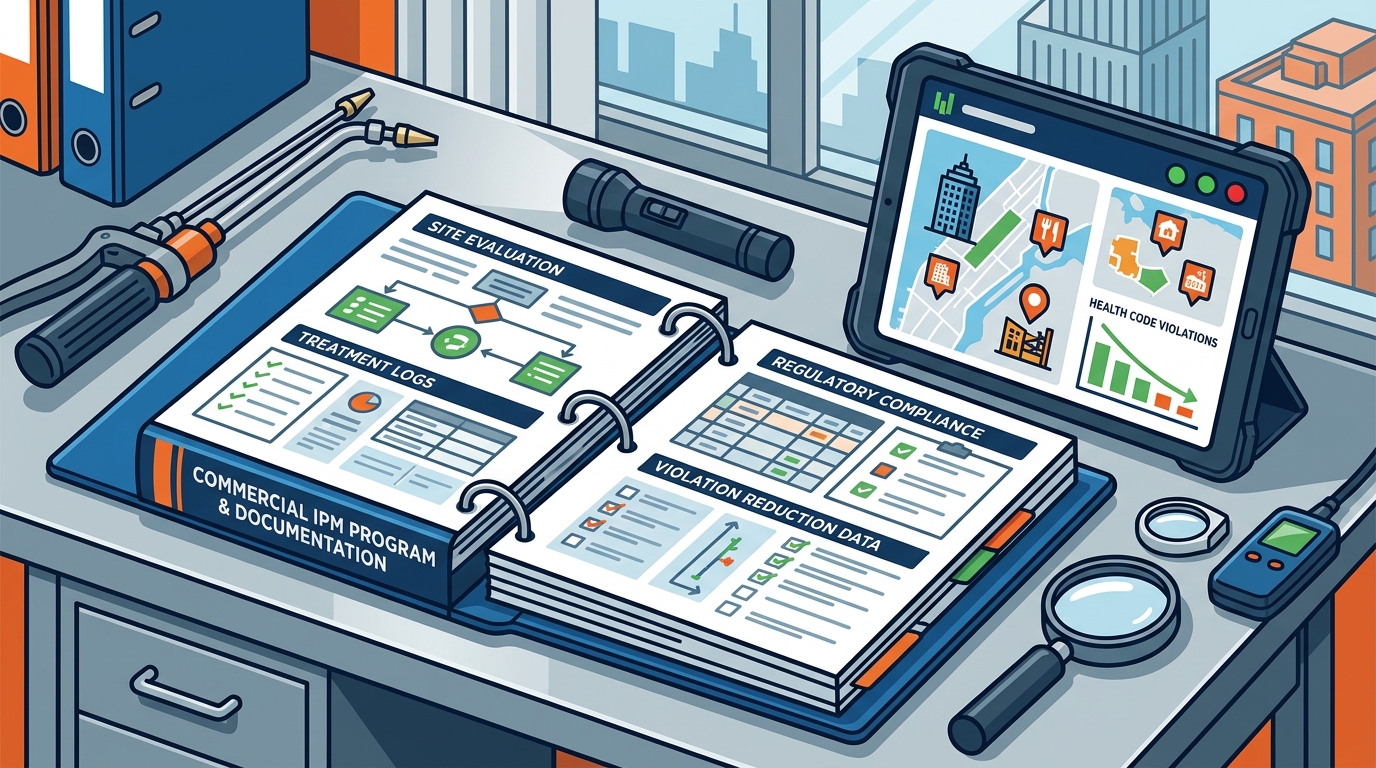
In the digital age, paper-based service logs are obsolete. Effective pest control requires real-time data and transparent communication. Evaluate the vendor's technology stack. Do they offer a digital client portal where you can access service reports, track pest activity, and manage invoices? This level of transparency is essential for property managers who need to demonstrate compliance to owners, tenants, and regulators.
Digital service documentation is the electronic record of all pest control activities, including inspection findings, treatments applied, and recommendations for follow-up, stored in a secure, accessible format. This documentation is your first line of defense in the event of a health inspection or legal dispute. It provides an auditable trail that proves your due diligence in maintaining a pest-free environment.
Ask about the frequency and detail of their reports. Do they provide photos of pest activity and treatment areas? Do they include maps of trap locations? These details are invaluable for identifying trends and evaluating the effectiveness of the program. A vendor who leverages technology to provide clear, actionable insights is a partner who adds value beyond the physical service.
Comparing Service Packages and Pricing Models
Finally, compare service packages and pricing structures. While cost is a factor, it should not be the primary driver. The cheapest option often lacks the depth of service, expertise, and technology required for NYC commercial properties. Look for value, not just price.
| Feature | Basic Reactive Service | Comprehensive IPM Program | Tactical Commercial Solution |
|---|---|---|---|
| Inspection Frequency | On-demand only | Quarterly scheduled | Monthly + Emergency |
| Documentation | Paper logs | Digital reports | Real-time portal access |
| Response Time | 24-48 hours | Same business day | <4 hours emergency |
| Compliance Support | None | Basic | Full DOH/HPD/DOB Ready |
| Technology | Legacy | Standard | Advanced IPM Platform |
Consider the total cost of ownership. A comprehensive IPM program may have a higher upfront cost but can prevent costly violations, tenant turnover, and reputational damage. Ask for a detailed breakdown of what is included in each package. Are there hidden fees for emergency calls? Are there long-term contract penalties? Transparency in pricing is a sign of a trustworthy vendor.
Key Takeaways
- Regulatory Knowledge is Non-Negotiable: Your vendor must understand DOH, HPD, DOB, and FDA/FSMA requirements specific to your sector.
- IPM is the Standard: Prioritize vendors who use Integrated Pest Management to prevent, not just react to, infestations.
- Speed Matters: Look for same-day or sub-4-hour emergency response capabilities to protect your business continuity.
- Certifications Verify Quality: QualityPro, IPM, and MWBE certifications indicate a commitment to professional excellence.
- Digital Documentation is Critical: Ensure the vendor provides real-time, accessible digital service logs for compliance and transparency.
- Value Over Price: The cost of a violation or reputation damage far exceeds the savings from a cheaper, less effective service.
- Local Expertise Wins: A vendor with a deep presence in NYC, like those with a fleet and offices in all five boroughs, offers superior logistical advantages.
Frequently Asked Questions
What is the difference between residential and commercial pest control in NYC?
Commercial pest control in NYC is governed by stricter regulations, such as DOH health codes and HPD housing standards, which require detailed documentation and specific treatment protocols not typically needed in residential settings.
How quickly can a pest control company respond to an emergency in NYC?
Top-tier commercial pest control providers in NYC offer same-day response, with many guaranteeing emergency service within four hours to minimize business disruption and reputational damage.
Why is IPM important for NYC commercial properties?
Integrated Pest Management (IPM) is important because it focuses on long-term prevention and compliance, reducing the need for harsh chemicals and providing the detailed records required for health inspections and audits.
What certifications should I look for in a NYC pest control vendor?
Look for QualityPro certification, IPM certification, and MWBE status, as these indicate a commitment to industry standards, professional training, and diverse business practices.
Do I need a Rodent Mitigation Plan for my construction site?
Yes, the NYC Department of Buildings (DOB) requires a Rodent Mitigation Plan before issuing permits for demolition and excavation projects to prevent pest infestations in surrounding areas.
How does digital documentation help with compliance?
Digital documentation provides real-time, auditable records of all pest control activities, which can be instantly produced during health inspections or legal proceedings to demonstrate due diligence.
What sectors does Broadway Pest Services specialize in?
Broadway Pest Services specializes in property management, restaurants, hotels, food processing, office buildings, construction sites, and healthcare/education facilities across NYC and surrounding areas.
Schedule Your Free Assessment
Choosing the right commercial pest control partner is a strategic decision that impacts your property's compliance, reputation, and bottom line. Do not leave your pest management to chance. Deploy a free assessment today to see how Broadway Pest Services can provide the tactical, compliant, and decisive pest control your NYC property demands. Visit Broadway Pest Services to learn more about our sector-specific solutions and deploy a free assessment for your property.