Pest Control Program Selection Criteria for SQF and BRC Compliance
Food safety audits are no longer just about checking boxes; they are about proving operational resilience. According to recent industry data, over 60% of food manufacturing facilities face at least one critical non-conformity related to pest management during their annual SQF or BRC certification audits. These failures often stem from selecting a pest control partner that lacks the specific documentation rigor and regulatory alignment required by global standards. For facility managers in New York City and beyond, choosing the right vendor is a strategic decision that directly impacts your bottom line and brand reputation. (Broadway Pest Services Urban)
Understanding SQF and BRC Requirements
Safe Quality Food (SQF) and British Retail Consortium (BRC) Global Standards are the two most recognized food safety certification programs worldwide. Both require a robust Integrated Pest Management (IPM) program that is not only effective but also fully documented. SQF Code Edition 9 emphasizes the need for a pest control program that is integrated into the facility's food safety plan. BRC Food Safety Issue 9 focuses heavily on the competence of pest control personnel and the traceability of all actions taken. (Broadway Pest Services Urban)
IPM is defined as a sustainable approach to managing pests by combining biological, cultural, physical, and chemical tools in a way that minimizes economic, health, and environmental risks. It is not merely about spraying chemicals when pests are seen. It is about prevention, monitoring, and precise intervention. Auditors look for evidence that the pest control program is proactive rather than reactive. They want to see trend analysis, not just service reports. (NYC Pest Control FAQ)
When evaluating vendors, you must ensure they understand the specific clauses of the standard you are pursuing. For instance, BRC requires that pest control contractors have a clear understanding of the facility's operations and the specific risks associated with it. SQF requires that the food safety team reviews pest control data regularly to identify trends and implement corrective actions. A vendor who cannot articulate these requirements is a liability, not an asset. (Broadway Pest Services Urban)
Critical Selection Criteria for Vendors
Selecting a pest control provider for a regulated environment requires a rigorous vetting process. You are not just buying a service; you are partnering for compliance. The following criteria are non-negotiable for any vendor aiming to support SQF and BRC certification.
1. Regulatory Knowledge and Certification
Your vendor must be fully licensed and certified in the jurisdictions where you operate. In New York City, this means being DOH (Department of Health) and HPD (Housing Preservation and Development) ready. For food processing facilities, familiarity with FDA, USDA, and FSMA (Food Safety Modernization Act) regulations is essential. Broadway Pest Services has been independently owned and operated since 1970, providing decades of experience in navigating these complex regulatory landscapes. Their QualityPro certification and MWBE status further demonstrate a commitment to industry standards and diverse business practices.
2. Technical Competence and Training
Not all technicians are created equal. BRC specifically requires that pest control personnel are competent and trained in the latest techniques. Ask your potential vendor about their training programs. Do they undergo regular continuing education? Do they specialize in food safety? A technician who understands the difference between a cockroach infestation in a restaurant kitchen and one in a food processing plant will approach the problem differently. The former requires immediate, visible action to protect public health, while the latter requires a discreet, data-driven IPM strategy to protect product integrity.
3. Response Time and Emergency Protocols
Pest issues do not wait for business hours. A critical selection criterion is the vendor's ability to provide rapid response. Broadway Pest Services offers same-day exterminator response across all five boroughs, Westchester, Bergen County NJ, and Nassau County. This rapid deployment capability is crucial for mitigating risks before they escalate into audit failures or product recalls. Inquire about their emergency protocols. Do they have a dedicated team for after-hours calls? How do they document these emergency interventions?
IPM Strategy Alignment
An effective IPM program is tailored to the specific needs of your facility. Generic pest control plans are a common cause of audit non-conformities. Your vendor must demonstrate the ability to design a customized IPM program that addresses your unique threats.
Prevention and Exclusion
The first line of defense is prevention. This includes structural exclusion, sanitation recommendations, and environmental controls. A competent vendor will conduct a thorough site assessment to identify potential entry points and harborage areas. They should provide actionable recommendations for improving facility hygiene and structural integrity. This proactive approach reduces the need for chemical interventions and aligns with the core principles of IPM.
Monitoring and Detection
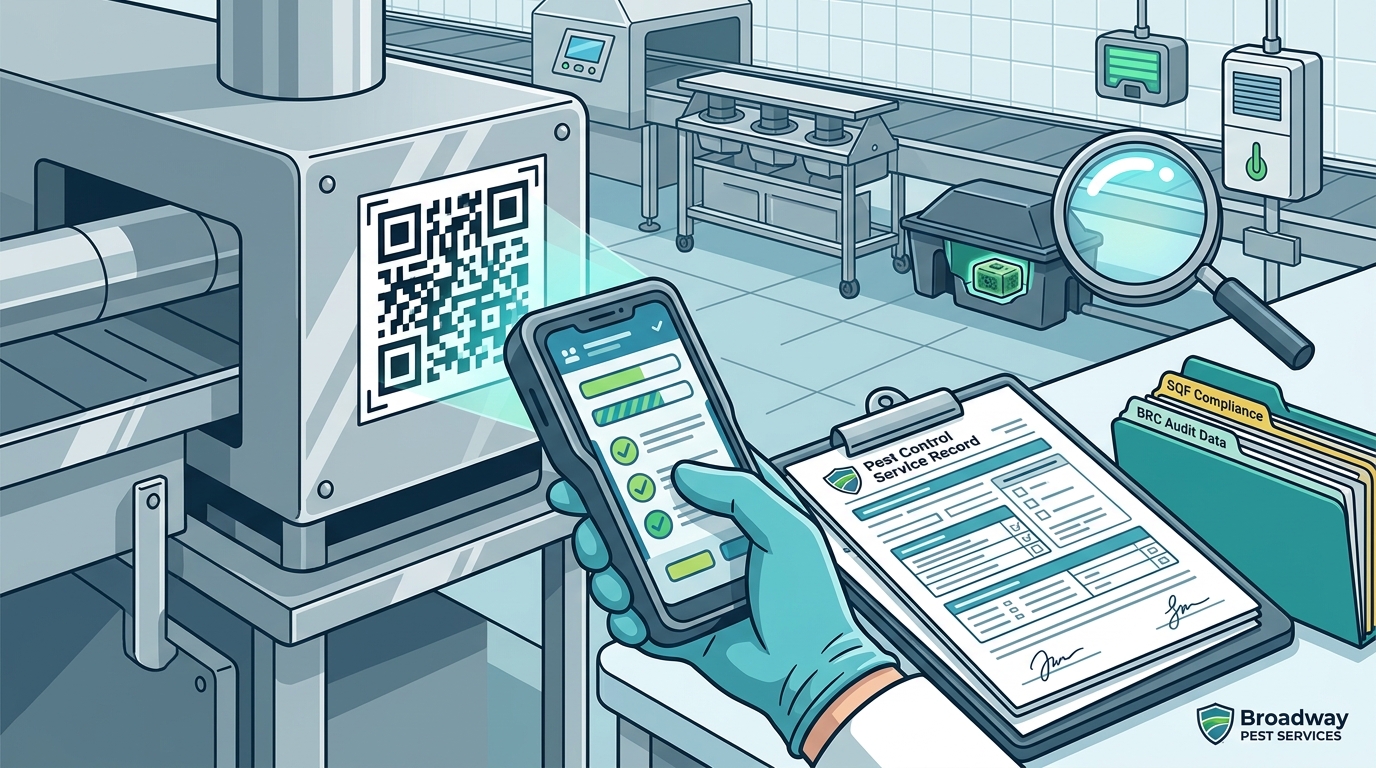
Monitoring is the backbone of any IPM program. This involves the strategic placement of monitoring devices such as rodent traps, insect light traps, and pheromone traps. The placement of these devices must be logical and based on risk assessment. Auditors will review trap maps and data to ensure that monitoring is comprehensive and effective. Broadway Pest Services utilizes 100% digital service documentation, ensuring that all monitoring data is accurate, timely, and easily accessible for audit review.
Intervention and Treatment
When intervention is necessary, it must be precise and targeted. Chemical treatments should be used as a last resort and only when non-chemical methods have failed or are insufficient. When chemicals are used, they must be applied in a manner that minimizes the risk of product contamination. This includes using food-grade materials where possible and ensuring that all treatments are documented with precise locations and quantities used. The goal is to neutralize the threat without compromising food safety.
Documentation and Technology
In the world of SQF and BRC compliance, if it is not documented, it did not happen. The quality and accessibility of your pest control documentation are just as important as the pest control itself. Digital documentation is no longer a luxury; it is a necessity.
Digital Service Logs
Traditional paper-based reports are prone to errors, loss, and difficulty in analysis. Digital service logs provide real-time access to pest control data. They allow for easy trend analysis, which is critical for identifying recurring issues and implementing corrective actions. Broadway Pest Services provides 24/7 service logs, ensuring that facility managers have immediate access to the latest information. This transparency is invaluable during audits and helps build trust with certification bodies.
Data Analysis and Reporting
Effective pest control programs generate vast amounts of data. Your vendor must have the capability to analyze this data and provide actionable insights. This includes trend analysis, heat maps of pest activity, and recommendations for continuous improvement. Look for vendors who offer regular review meetings with your food safety team to discuss findings and adjust strategies as needed. This collaborative approach ensures that the pest control program evolves with your facility's changing needs.
Traceability and Audit Readiness
Auditors will scrutinize your pest control records for traceability. Every action taken must be linked to a specific device, a specific technician, and a specific date. Digital systems should allow for easy retrieval of this information. Additionally, your vendor should be prepared to support you during audits, providing expert testimony on the effectiveness of the pest control program. Broadway Pest Services is DOH Compliant and HPD Ready, ensuring that all documentation meets local regulatory standards, which often exceed federal requirements.
Sector-Specific Compliance
Different sectors face unique pest control challenges and regulatory requirements. Your vendor must have experience in your specific industry.
| Sector | Key Regulatory Focus | Vendor Capability Requirement |
|---|---|---|
| Food Processing | FDA, USDA, FSMA, AIB Standards | Audit readiness, zero tolerance protocols, food-grade materials |
| Restaurants & DOH | Local DOH Grades, Public Health | Same-day response, kitchen-safe IPM, A-grade protection |
| Property Management | HPD Violations, Tenant Complaints | Documented IPM programs, violation defense support |
| Healthcare & Education | NYS Ed Law 409-h, Local Law 55 | Low-chemical IPM, sensitive environment protocols |
| Construction Sites | NYC DOB Rodent Mitigation Plans | Compliant plan development, on-site monitoring |
For example, in the food processing sector, the stakes are incredibly high. A single pest sighting can lead to a shutdown of production and a failed audit. Broadway Pest Services builds programs around AIB standards and unannounced audit readiness, ensuring that your facility is always prepared for inspection. In the restaurant sector, a single DOH violation can cost more than a year of pest control. Their kitchen-safe IPM and same-day emergency response protect your grade and your reputation.
Key Takeaways
- Independence Matters: Broadway Pest Services has been independently owned and operated since 1970, ensuring consistent standards and accountability without the interference of private equity rollups.
- Regulatory Readiness: Vendors must be DOH, HPD, FDA, and USDA compliant. Broadway Pest is DOH Compliant and HPD Ready, meeting the highest local and federal standards.
- Digital Documentation: 100% digital service documentation is essential for real-time access, trend analysis, and audit readiness. Broadway Pest provides 24/7 service logs.
- Rapid Response: Same-day exterminator response is critical for mitigating risks. Broadway Pest offers same-day response across NYC, Westchester, Bergen County NJ, and Nassau County.
- Specialized Expertise: Different sectors require different IPM strategies. Ensure your vendor has specific experience in your industry, such as food processing or healthcare.
- Green Fleet: Broadway Pest utilizes a green fleet, including a 100% electric VW ID Buzz and an all-electric Arcimoto FUV, demonstrating a commitment to sustainability and urban efficiency.
- QualityPro Certified: Look for vendors with QualityPro certification, which indicates a commitment to industry best practices and professional excellence.
Frequently Asked Questions
What is the difference between SQF and BRC pest control requirements?
SQF focuses on integrating pest control into the facility's food safety plan and requires regular review by the food safety team. BRC emphasizes the competence of pest control personnel and the traceability of all actions. Both require a robust IPM program, but BRC places a stronger emphasis on the qualifications of the contractor.
Why is digital documentation important for pest control audits?
Digital documentation provides real-time access to pest control data, allowing for easy trend analysis and immediate corrective actions. It ensures traceability and accuracy, which are critical for audit readiness. Paper-based reports are prone to errors and loss, making them less reliable for compliance purposes.
How does Broadway Pest Services ensure compliance with FDA and USDA regulations?
Broadway Pest Services builds IPM programs specifically around FDA, USDA, and FSMA compliance demands. Their programs are designed for zero tolerance and unannounced audit readiness, ensuring that facilities meet the strictest regulatory standards.
What is the emergency response time for pest control issues?
Broadway Pest Services offers same-day exterminator response across all five boroughs, Westchester, Bergen County NJ, and Nassau County. This rapid deployment capability is crucial for mitigating risks before they escalate into audit failures or product recalls.
Does Broadway Pest Services offer services for healthcare and education facilities?
Yes, Broadway Pest Services provides low-chemical IPM programs that satisfy NYS Ed Law 409-h, Local Law 55, and accreditation survey standards. Their sensitive environment protocols ensure the safety of patients, students, and staff.
What certifications does Broadway Pest Services hold?
Broadway Pest Services is QualityPro Certified, MWBE Certified, DOH & HPD Ready, and IPM Certified. These certifications demonstrate a commitment to industry best practices, professional excellence, and regulatory compliance.
How does Broadway Pest Services support property managers with HPD violations?
Broadway Pest Services provides documented IPM programs and service logs that hold up in any proceeding. They offer HPD violation defense support, helping property managers navigate the complexities of housing regulations and tenant complaints.
Secure Your Compliance
Don't let pest control be the weak link in your food safety chain. Partner with a vendor that understands the intricacies of SQF and BRC compliance. Broadway Pest Services has been NYC's commercial pest authority since 1970, providing tactical, documented, and compliant pest control solutions. Deploy a free assessment today and ensure your facility is audit-ready. Visit broadwayexterminating.com to learn more about our services and schedule your consultation.