

Comparing Rodent Prevention: Strategies for NYC Commercial & Residential Properties
Rodent infestations in New York City are not merely a nuisance; they are a critical operational threat. Data shows that over 3.5 million rodent-related complaints are filed annually in major metropolitan areas, with New York City consistently ranking among the highest for density and frequency. NYC Health Department reports confirm that rats and mice are primary vectors for disease, requiring immediate and strategic intervention. Generic pest control fails because it treats symptoms rather than the structural vulnerabilities that allow infestations to thrive. This article compares the most effective rodent prevention methodologies, evaluating their efficacy, compliance requirements, and long-term value for property managers, restaurant owners, and homeowners. (Broadway Pest Services Urban)
1. Structural Exclusion and Hardening
Structural exclusion is the foundational layer of rodent prevention. It involves physically sealing entry points to prevent rodents from entering a building. This method is highly effective but requires rigorous attention to detail.
Material Selection
Rodents have teeth that grow continuously. They can chew through wood, plastic, and even soft concrete. Effective exclusion requires materials they cannot penetrate. Steel wool, hardware cloth, and expanding foam with rodent-resistant additives are the industry standards. Copper mesh is also highly effective because it resists corrosion and chewing.
Common Entry Points
Exclusion efforts must target specific vulnerabilities. Common entry points include gaps around utility lines, vents, roof edges, and foundation cracks. In older NYC buildings, these gaps are often hidden behind drywall or insulation. A professional inspection is critical to identify these blind spots.
Compliance and Regulations
For commercial properties, structural exclusion must comply with local building codes and health department regulations. NYC Local Law 11 mandates specific standards for building maintenance to prevent pest infestations. Failure to comply can result in significant fines and operational shutdowns.
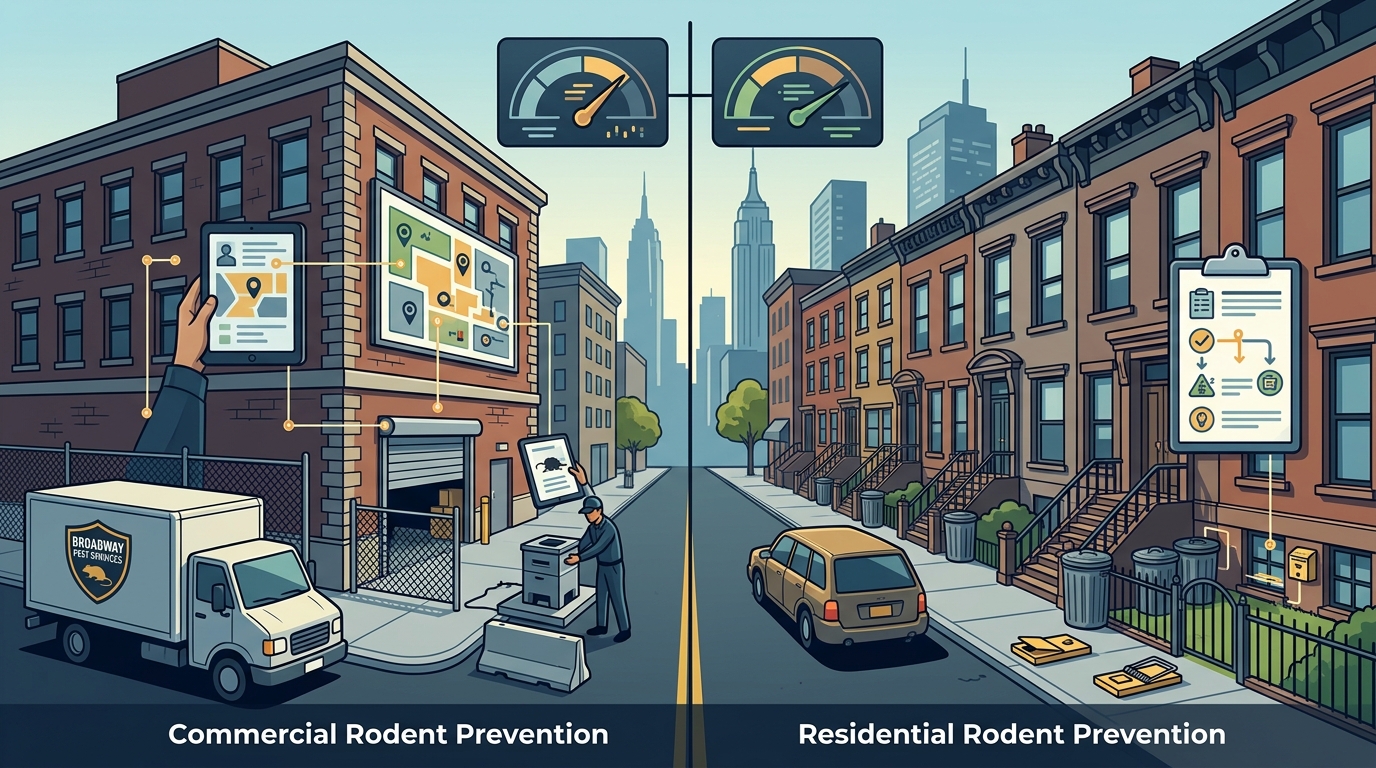
2. Integrated Pest Management (IPM) Frameworks
Integrated Pest Management (IPM) is a holistic approach that combines multiple prevention strategies. It is the gold standard for commercial pest control, particularly in food service and healthcare sectors.
Core Components of IPM
IPM is not a single product or service. It is a systematic process. IPM is a comprehensive strategy that prioritizes long-term prevention through a combination of techniques. These include monitoring, identification, and targeted intervention. The goal is to manage pest populations below economically damaging levels while minimizing risks to human health and the environment.
Documentation and Accountability
A critical component of IPM is documentation. Every inspection, treatment, and exclusion effort is recorded. This creates an audit trail that is essential for health inspections and legal protection. EPA guidelines on IPM emphasize the importance of record-keeping for regulatory compliance.
Customization for Sectors
IPM programs are tailored to the specific needs of each property. A restaurant requires different protocols than a residential building. Commercial pest control services must account for kitchen safety, tenant privacy, and operational continuity.
3. Sanitation and Waste Management Protocols
Sanitation is the most overlooked aspect of rodent prevention. Rodents are attracted to food, water, and shelter. Removing these attractants is essential for long-term success.
Waste Management
Proper waste management is critical. Sealed, rodent-proof dumpsters and regular waste removal schedules are non-negotiable. Open or poorly sealed waste containers are a primary food source for rats. In NYC, waste management is strictly regulated by the Department of Sanitation.
Kitchen Hygiene
For restaurants and food processing facilities, kitchen hygiene is paramount. Grease traps, floor drains, and storage areas must be cleaned regularly. FDA food safety standards require rigorous cleaning protocols to prevent contamination.
Landscaping and Exterior Maintenance
Exterior landscaping can also attract rodents. Overgrown vegetation, wood piles, and standing water provide shelter and water sources. Regular maintenance of the exterior environment is a key prevention strategy.
4. Advanced Monitoring and Technology
Technology has revolutionized rodent prevention. Modern monitoring systems provide real-time data and early detection capabilities.
Digital Monitoring Systems
Digital monitoring systems use sensors to detect rodent activity. These systems send alerts to property managers and pest control professionals when activity is detected. This allows for rapid response before an infestation becomes established.
Data Analytics
Advanced monitoring systems generate data that can be analyzed to identify trends and predict future activity. Recent studies on pest behavior show that data-driven insights can significantly improve prevention efficacy.
Integration with IPM
Monitoring technology is most effective when integrated with an IPM framework. The data from monitoring systems informs inspection and treatment decisions, creating a feedback loop that continuously improves prevention efforts.
Comparison of Prevention Strategies
The following table compares the key aspects of the four primary rodent prevention strategies discussed above.
| Strategy | Efficacy | Cost | Implementation Time | Best For |
|---|---|---|---|---|
| Structural Exclusion | High | Medium | Short to Medium | New construction, renovations |
| IPM Frameworks | Very High | High | Ongoing | Commercial, Healthcare, Food Service |
| Sanitation Protocols | Medium | Low | Ongoing | All property types |
| Advanced Monitoring | High | Medium to High | Short | Large commercial complexes, sensitive environments |
Key Takeaways
- Structural exclusion is the first line of defense. Sealing entry points with rodent-proof materials is essential for preventing initial infestations.
- IPM is the industry standard for commercial properties. It combines multiple strategies for comprehensive, documented, and compliant pest management.
- Sanitation is critical but often neglected. Proper waste management and hygiene protocols remove the attractants that draw rodents to a property.
- Technology enhances prevention. Digital monitoring systems provide early detection and data-driven insights for proactive management.
- Compliance is non-negotiable. NYC regulations require specific standards for pest control in commercial and residential buildings.
- Independently owned operators provide accountability. Companies like Broadway Pest Services maintain consistent standards without the pressure of private equity rollups.
- Same-day response is vital. Rapid intervention prevents minor issues from becoming major infestations.
Frequently Asked Questions
What is the most effective rodent prevention method?
No single method is sufficient on its own. The most effective approach is an Integrated Pest Management (IPM) program that combines structural exclusion, sanitation, and monitoring.
How often should I inspect my property for rodent entry points?
Professional inspections should occur at least quarterly. However, after severe weather events or construction work, immediate inspections are recommended.
Can I prevent rodents without using pesticides?
Yes. IPM emphasizes non-chemical methods first, such as exclusion and sanitation. Pesticides are used only as a targeted tool when necessary.
What are the common signs of a rodent infestation?
Signs include droppings, gnaw marks, unusual noises in walls or ceilings, and grease marks along baseboards.
How does Broadway Pest Services differ from other providers?
Broadway Pest Services is independently owned and operated, ensuring consistent standards and accountability. They offer same-day response and specialized IPM programs for commercial clients.
Is rodent prevention covered by insurance?
Typically, routine prevention is not covered by insurance. However, damage resulting from a covered peril may be. Consult your insurance provider for specific details.
What is the cost of rodent prevention services?
Costs vary based on the size of the property and the level of service required. Broadway Pest Services offers free assessments to provide accurate pricing.
Secure Your Property with Broadway Pest Services
Don't wait for an infestation to compromise your property's safety and reputation. Broadway Pest Services provides expert rodent prevention and tactical pest control across NYC, Westchester, and Bergen County. Our independently owned, QualityPro certified team delivers documented, compliant, and decisive solutions. Deploy a free assessment today to protect your property with NYC's commercial pest authority.