

Common Bed Bug Control Mistakes in NYC Apartments and How to Avoid Them
Bed bugs are not just a nuisance; they are a structural and reputational crisis for New York City property owners. According to recent industry data, the average cost of professional bed bug eradication in dense urban markets like Manhattan can exceed $3,000 per treatment cycle, with multi-unit infestations driving costs significantly higher. This financial burden is compounded by the rapid spread of pests through shared walls, ventilation shafts, and plumbing chases. For landlords, property managers, and tenants alike, understanding the mechanics of infestation is critical. The difference between a manageable spot treatment and a building-wide crisis often lies in the initial response. Many residents fall into the trap of using over-the-counter sprays that only scatter the colony, while property managers delay reporting, allowing the population to double every five days.
Mistake 1: Relying on Over-the-Counter Sprays
The most common error in NYC apartments is the immediate purchase of retail pesticide sprays from hardware stores. Bed bugs have developed significant resistance to common pyrethroids found in consumer products. When you spray these chemicals, you do not kill the colony; you merely agitate them. This causes the bugs to scatter into deeper wall voids, baseboards, and neighboring units, making the eventual professional eradication more difficult and expensive.
Bed bugs are cryptic pests that hide in tight crevices during the day. Retail sprays cannot penetrate these hiding spots. Instead of a quick fix, you create a larger, more dispersed problem. The correct approach is to contain the area and call a licensed exterminator who can apply targeted, professional-grade formulations that bypass resistance.
Mistake 2: Delaying Professional Assessment
Time is the enemy of bed bug control. A single female bed bug can lay up to five eggs per day, leading to exponential population growth. Waiting even a few weeks to seek help allows the infestation to become entrenched in the mattress, box spring, and surrounding furniture. In NYC, where housing density is high, this delay is particularly dangerous because the pests have multiple pathways to escape the unit.
Early detection is the most cost-effective strategy. If you suspect an infestation, do not wait for bites to appear. Look for signs such as small rust-colored stains on sheets, shed skins, or live bugs in the seams of mattresses. Professional residential pest control services can confirm the presence of bugs through rigorous inspection, ensuring that treatment begins immediately. Delaying this process often turns a localized issue into a whole-building emergency.
Mistake 3: Ignoring the Spread to Adjacent Units
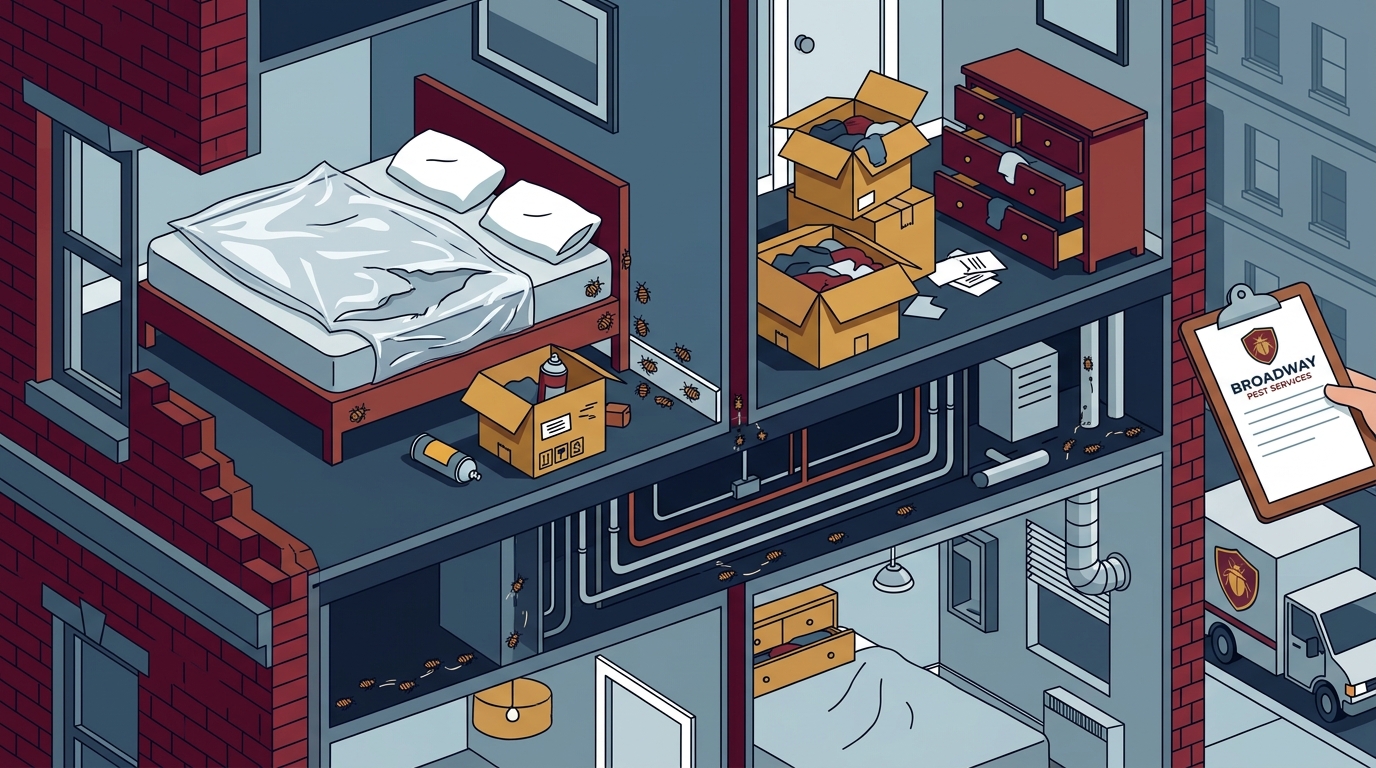
Many residents believe that bed bugs stay within their own apartment. This is a dangerous misconception. Bed bugs are excellent hitchhikers and can travel through electrical outlets, plumbing pipes, and shared wall voids. In a typical NYC multi-family building, an untreated unit can re-infest neighboring apartments within days.
Property managers must treat infestations as building-wide events, not isolated incidents. This requires coordinated communication and simultaneous treatment of adjacent units. Property management pest control protocols should include mandatory inspections of units above, below, and beside the confirmed infestation. Ignoring this step guarantees that the problem will persist, regardless of how many times the original unit is treated.
Mistake 4: Improper Heat Treatment Application
Heat treatment is widely regarded as one of the most effective methods for eradicating bed bugs because it kills all life stages, including eggs, without chemicals. However, improper application is a common mistake. The entire room must reach a specific temperature threshold, typically between 135°F and 145°F, and maintain that temperature for several hours. If the heat does not penetrate into wall voids, furniture, and clutter, the bugs will survive.
DIY heat treatments are ineffective and dangerous. Professional commercial pest control experts use industrial-grade heaters and fans to ensure uniform heat distribution. They also monitor the temperature with probes placed in hidden areas to verify that the kill zone is achieved. Attempting to use space heaters or steamers without proper equipment often results in fire hazards and incomplete eradication.
Mistake 5: Neglecting Post-Treatment Monitoring
Even after a successful treatment, bed bugs can return if monitoring is not maintained. Post-treatment monitoring involves the use of interceptors under bed legs, regular visual inspections, and sometimes follow-up treatments. This step is crucial for confirming that the infestation is truly gone and not just dormant.
Many residents stop their efforts once the bugs disappear, only to have a new wave emerge from a surviving egg or a re-infested neighbor. Established pest control firms provide detailed service logs and follow-up schedules to ensure long-term success. Ignoring this phase leaves the property vulnerable to future outbreaks.
Comparing Treatment Approaches
Understanding the differences between treatment methods is essential for making informed decisions. The table below summarizes the key characteristics of common bed bug control strategies.
| Treatment Method | Effectiveness | Cost Range | Best For | Risks |
|---|---|---|---|---|
| Chemical Treatment | High (with professional grade) | $1,500 - $3,000 | Localized infestations | Resistance, chemical exposure |
| Heat Treatment | Very High | $2,000 - $4,000 | Severe infestations | Damage to heat-sensitive items |
| DIY Sprays | Low | $20 - $50 | None | Scattering, resistance |
| Steam Cleaning | Moderate | $100 - $300 | Surface bugs | Incomplete penetration |
Key Takeaways
- Do Not Spray Retail Chemicals: Over-the-counter sprays scatter bed bugs and increase resistance, making professional treatment harder.
- Act Immediately: Bed bug populations double rapidly; early intervention reduces costs and complexity.
- Treat Adjacent Units: In NYC apartments, pests spread through walls and pipes; neighboring units must be inspected and treated simultaneously.
- Professional Heat Treatment: This method is highly effective but requires industrial equipment to reach kill temperatures in all hiding spots.
- Monitor Post-Treatment: Use interceptors and follow-up inspections to ensure the infestation is fully eradicated.
- Choose Experienced Providers: Look for companies with decades of experience, such as those serving NYC since 1970, to ensure compliance and effectiveness.
- Digital Documentation: Professional services provide 24/7 digital service logs, which are essential for property management and legal compliance.
Frequently Asked Questions
How quickly do bed bugs spread in NYC apartments?
Bed bugs can spread to adjacent units within days through wall voids and plumbing chases. In high-density buildings, a single untreated unit can lead to a building-wide infestation if not addressed immediately.
Is heat treatment safe for my furniture?
Professional heat treatment is generally safe, but heat-sensitive items like candles, aerosols, and certain electronics must be removed beforehand. Experts ensure that temperatures are controlled to prevent damage.
Why do over-the-counter sprays fail?
Bed bugs have developed resistance to common pyrethroids found in retail products. These sprays also agitate the bugs, causing them to scatter into deeper hiding spots, which complicates professional eradication.
What is the cost of professional bed bug removal in NYC?
Costs vary based on the severity of the infestation and the treatment method. Typically, professional treatments range from $1,500 to $4,000 per unit, with heat treatment often being more expensive due to equipment and labor requirements.
Do I need to treat neighboring units?
Yes, in most multi-family buildings, adjacent units must be inspected and often treated to prevent re-infestation. Coordinated action is the only way to ensure long-term success.
How long does it take to eradicate bed bugs?
Eradiation can take one to three treatments, depending on the severity. Heat treatment may resolve the issue in a single day, while chemical treatments may require follow-up visits over several weeks.
What should I do if I find bed bugs?
Contain the area, avoid moving items to other rooms, and contact a professional pest control service immediately. Do not attempt to clean or treat the area yourself before an inspection.
Secure Your Property Today
Bed bugs are a persistent threat in New York City, but they are manageable with the right approach. Avoid common mistakes by acting quickly, treating adjacent units, and relying on professional expertise. Broadway Pest Services offers same-day response and documented IPM programs to protect your property. Contact us today to deploy a free assessment and ensure your building remains pest-free.