

Common Pest Control Coverage Mistakes That Put NYC Multi-Building Portfolios at Risk
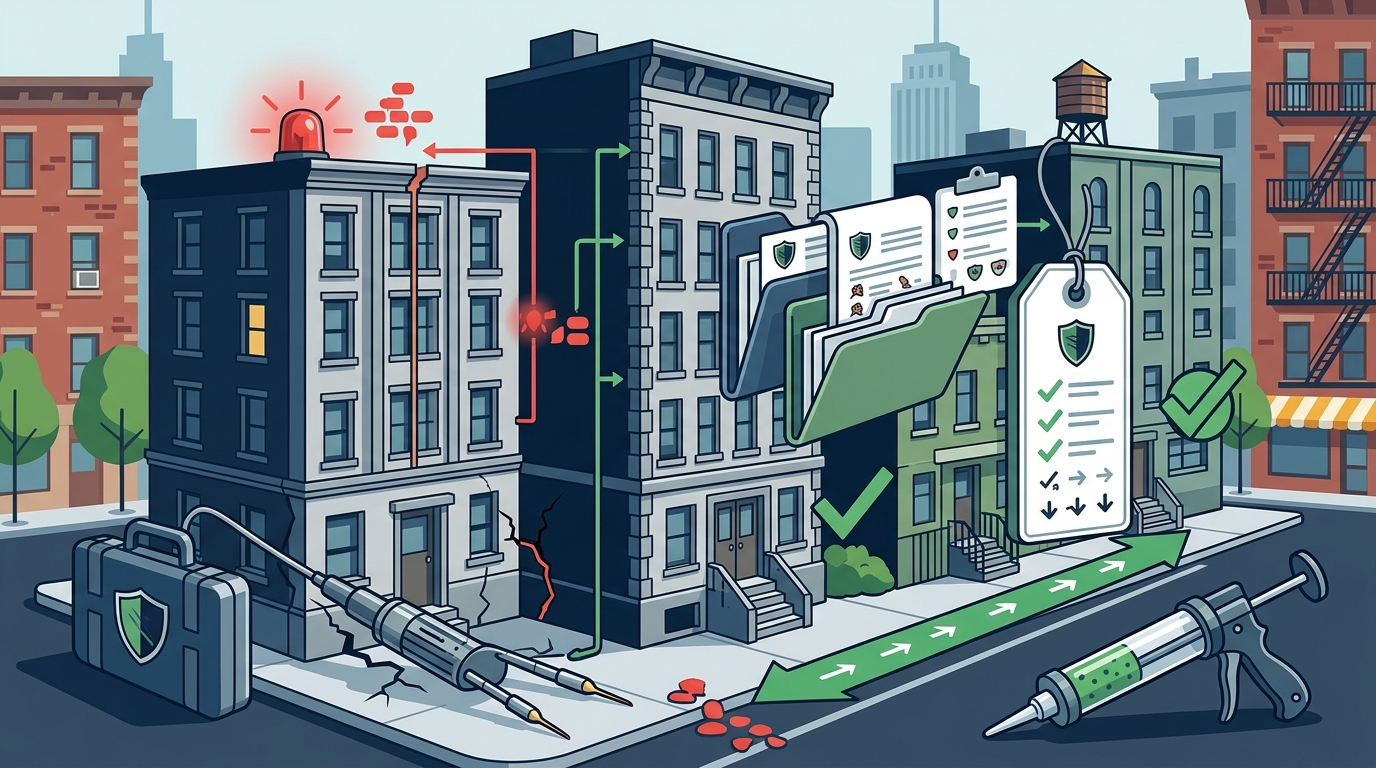
Multi-building property managers in New York City face a unique set of operational pressures that generic pest control contracts simply cannot address. According to recent industry data, DOH violations can cost a single restaurant or residential building thousands of dollars in fines and lost revenue. When you manage a portfolio of five or more properties, a single compliance failure in one building can trigger a cascade of tenant complaints, HPD violations, and reputational damage across the entire portfolio. The margin for error is non-existent. (Broadway Pest Services Urban)
Generic vs. Tactical IPM Strategies
Many property managers make the critical error of treating pest control as a commodity. They sign a blanket contract with a national provider that applies a one-size-fits-all approach to every building in their portfolio. This is a fundamental misunderstanding of Integrated Pest Management (IPM). IPM is a comprehensive, environmentally sensitive approach to pest control that relies on a combination of common-sense practices. (Broadway Pest Services Urban)
In New York City, the definition of IPM must be adapted to the urban density. Generic providers often rely heavily on chemical treatments because they lack the tactical infrastructure to address root causes. Broadway Pest Services treats pest control like an operational mission. This means documenting every entry, every treatment, and every exclusion. It means deploying specialized fleets, such as our all-electric Arcimoto FUV, to navigate Manhattan traffic for same-day response. Generic providers cannot match this level of operational precision. (NYC Pest Control FAQ)
When you manage a multi-building portfolio, you need a partner who understands that a cockroach infestation in a Harlem co-op is different from a rodent issue in a Midtown office tower. The regulatory stakes, tenant expectations, and building infrastructure vary wildly. A tactical approach ensures that each building receives a customized IPM program that addresses its specific threats and compliance requirements. (Broadway Pest Services Urban)
Sector-Specific Regulatory Blind Spots
Another common mistake is failing to align pest control services with the specific regulatory environment of each property type. New York City has distinct agencies and laws that govern different sectors. Ignoring these nuances can lead to severe penalties and operational shutdowns.
Property Management and HPD
For residential and mixed-use buildings, the Department of Housing Preservation and Development (HPD) is the primary regulator. HPD violations are not just fines; they are public records that can affect your building's standing and tenant trust. A generic provider may not provide the detailed service logs required to defend against these violations in HPD proceedings. You need a partner who understands HPD violation defense and can provide documentation that holds up in any proceeding.
Restaurants and DOH
In the food service sector, a single DOH violation can cost more than a year of pest control services. The Department of Health and Mental Hygiene (DOH) conducts unannounced inspections. If your pest control provider cannot produce real-time, digital service records, your restaurant's grade is at risk. A-grade protection requires more than just spraying; it requires kitchen-safe IPM and same-day emergency response to keep your establishment compliant.
Food Processing and FDA
For commercial food processing facilities, the stakes are even higher. FDA, USDA, and FSMA compliance demands zero tolerance for pests. Our programs are built around AIB standards and unannounced audit readiness. If your provider is not familiar with these federal standards, you are exposed to massive liability.
The Documentation Gap in Audits
Data shows that FDA audits often fail due to poor documentation rather than actual pest presence. Many property managers assume that pest control is "out of sight, out of mind." This is a dangerous assumption. In a multi-building portfolio, you need 100% digital service documentation that is accessible in real-time.
Broadway Pest Services provides 24/7 service logs that are compliant with DOH and HPD requirements. This means that when an inspector walks into your building, you can immediately produce the necessary records. This level of transparency is not available with traditional providers who rely on paper trails or delayed digital updates. In the event of a dispute or audit, your documentation is your primary defense.
Response Latency and RevPAR Impact
For hoteliers and hospitality managers, time is money. One bed bug review on TripAdvisor can cost thousands in RevPAR (Revenue Per Available Room). The speed of your pest control response directly impacts your reputation and bottom line. Generic providers often have long wait times for non-emergency calls, which can allow a minor issue to become a major outbreak.
Broadway Pest Services offers a <4hr emergency response time across all five boroughs. This rapid deployment capability is crucial for hospitality clients who need discreet detection and rapid response to protect their reputation. Our all-electric fleet allows us to navigate Manhattan traffic efficiently, ensuring that we arrive on-site quickly and without the emissions that can disturb guests or violate local green building standards.
Urban Fleet Logistics and Access
New York City's infrastructure presents unique logistical challenges. Standard pest control vans often struggle with narrow streets, parking restrictions, and traffic congestion. This can delay response times and increase operational costs. A provider with a specialized urban fleet has a significant advantage.
Broadway Pest Services is the only pest control fleet in NYC with a wrapped all-electric Arcimoto three-wheeler and a 100% electric VW ID Buzz. This fleet is built for rapid urban deployment. The Arcimoto FUV cuts through Manhattan traffic for same-day response that no standard van can match. This zero-tailpipe emission capability is not just environmentally friendly; it is operationally superior in dense urban environments.
Portfolio Compliance Checklist
To mitigate risk across your multi-building portfolio, use the following checklist to evaluate your current pest control provider:
| Compliance Area | Key Requirement | Risk of Non-Compliance |
|---|---|---|
| HPD Violations | Detailed IPM logs and exclusion reports | Fines, tenant lawsuits, building devaluation |
| DOH Inspections | Real-time digital service records | Grade reduction, temporary closure |
| FDA/FSMA | AIB standard alignment | Audit failure, federal penalties |
| Emergency Response | <4hr response time | Reputation damage, RevPAR loss |
| Urban Logistics | Electric/hybrid fleet for traffic access | Delayed response, carbon footprint issues |
Key Takeaways
- Independently Owned Since 1970: Broadway Pest Services has maintained consistent standards for over five decades, avoiding the service degradation common in private equity rollups.
- QualityPro Certified: Our certification ensures that our IPM practices meet the highest industry standards for safety and efficacy.
- MWBE Certified: As a Minority and Women-Owned Business Enterprise, we are committed to inclusive economic growth in NYC.
- DOH & HPD Ready: Our documentation and protocols are specifically designed to meet the rigorous demands of NYC health and housing departments.
- 24/7 Service Logs: Real-time digital access to service records provides immediate proof of compliance for inspectors and tenants.
- All 5 Boroughs: We provide comprehensive coverage across Manhattan, Brooklyn, Queens, the Bronx, and Staten Island.
- Green Fleet: Our use of electric and hybrid vehicles reduces our carbon footprint and improves access in congested urban areas.
Frequently Asked Questions
What is Integrated Pest Management (IPM)?
Integrated Pest Management (IPM) is a comprehensive, environmentally sensitive approach to pest control that relies on a combination of common-sense practices to manage pest populations while minimizing risk to people and the environment.
How does Broadway Pest Services handle HPD violations?
We provide detailed IPM programs and service logs that are specifically designed to hold up in HPD proceedings. Our documentation includes every treatment, exclusion, and inspection, providing a robust defense against violations.
What is the emergency response time for NYC properties?
Broadway Pest Services offers a less than 4-hour emergency response time across all five boroughs, ensuring rapid intervention for critical pest issues.
Does Broadway Pest Services have a green fleet?
Yes, we operate NYC's greenest pest control fleet, including a 100% electric VW ID Buzz and an all-electric Arcimoto FUV, which allows for rapid urban deployment with zero tailpipe emissions.
How do you ensure FDA compliance for food processing clients?
Our programs are built around AIB standards and unannounced audit readiness. We provide the documentation and tactical pest control measures required to meet FDA, USDA, and FSMA regulations.
What areas do you service beyond NYC?
In addition to all five NYC boroughs, we provide same-day exterminator response across Westchester, Bergen County NJ, and Nassau County.
Why is independent ownership important for pest control?
Independent ownership ensures that service standards are set by experienced professionals rather than outside investors. It guarantees accountability, consistent technician quality, and a commitment to long-term client relationships.
Secure Your Portfolio
Do not let generic pest control practices put your multi-building portfolio at risk. Deploy a Free Assessment today to experience the tactical, compliant, and rapid response that NYC's most demanding commercial clients trust. Visit our client portal or call (212) 663-2100 to schedule your consultation.