

Building-by-Building Pest Control Coverage Framework for NYC Property Managers
New York City remains the most dense urban environment in the United States, creating a unique and relentless pressure on commercial real estate assets. For property managers, pest management is no longer a reactive maintenance task but a critical component of regulatory compliance and asset protection. NYC's commercial pest authority since 1970, Broadway Pest Services operates with the understanding that generic solutions fail in high-stakes environments. The city's infrastructure, from pre-war walk-ups to modern skyscrapers, requires a tailored approach that addresses specific structural vulnerabilities and regulatory exposures. (Broadway Pest Services Urban)
According to recent industry analyses, the cost of a single Department of Health and Mental Hygiene (DOH) violation can exceed the annual budget for routine pest management services. This financial reality underscores the necessity of a proactive, building-by-building framework. Property managers must shift from viewing pest control as a commodity to treating it as an operational mission. This guide outlines the essential components of a robust coverage framework, ensuring that your portfolio remains compliant, protected, and profitable. (Broadway Pest Services Urban)
Understanding the NYC Pest Landscape
Effective pest control begins with a deep understanding of the local ecosystem. New York City's dense population, aging infrastructure, and constant influx of goods create ideal conditions for pest proliferation. Urban Tactical Pest Control is not just a marketing term; it is a necessary operational stance. The city's five boroughs present distinct challenges, from the rodent pressure in older residential buildings to the cockroach risks in high-traffic hospitality venues. (NYC Pest Control FAQ)
Integrated Pest Management, or IPM, is a comprehensive approach to pest control that focuses on long-term prevention and mitigation of pests through a combination of techniques such as biological control, habitat manipulation, modification of human behavior, and use of resistant varieties. In the context of NYC commercial properties, IPM is the only viable strategy for maintaining compliance with local laws. Generic pest control does not work for NYC commercial properties because each sector faces distinct regulatory stakes. Cockroach infestations, rodent problems, bed bug outbreaks, and fly pressure each carry different regulatory stakes in New York City. (Broadway Pest Services Urban)
Property managers must recognize that pests are not merely a nuisance but a liability. A single incident can trigger a cascade of regulatory fines, tenant lawsuits, and reputational damage. Therefore, the framework for coverage must be proactive, data-driven, and deeply integrated into the building's operational workflow.
Sector-Specific Vulnerabilities
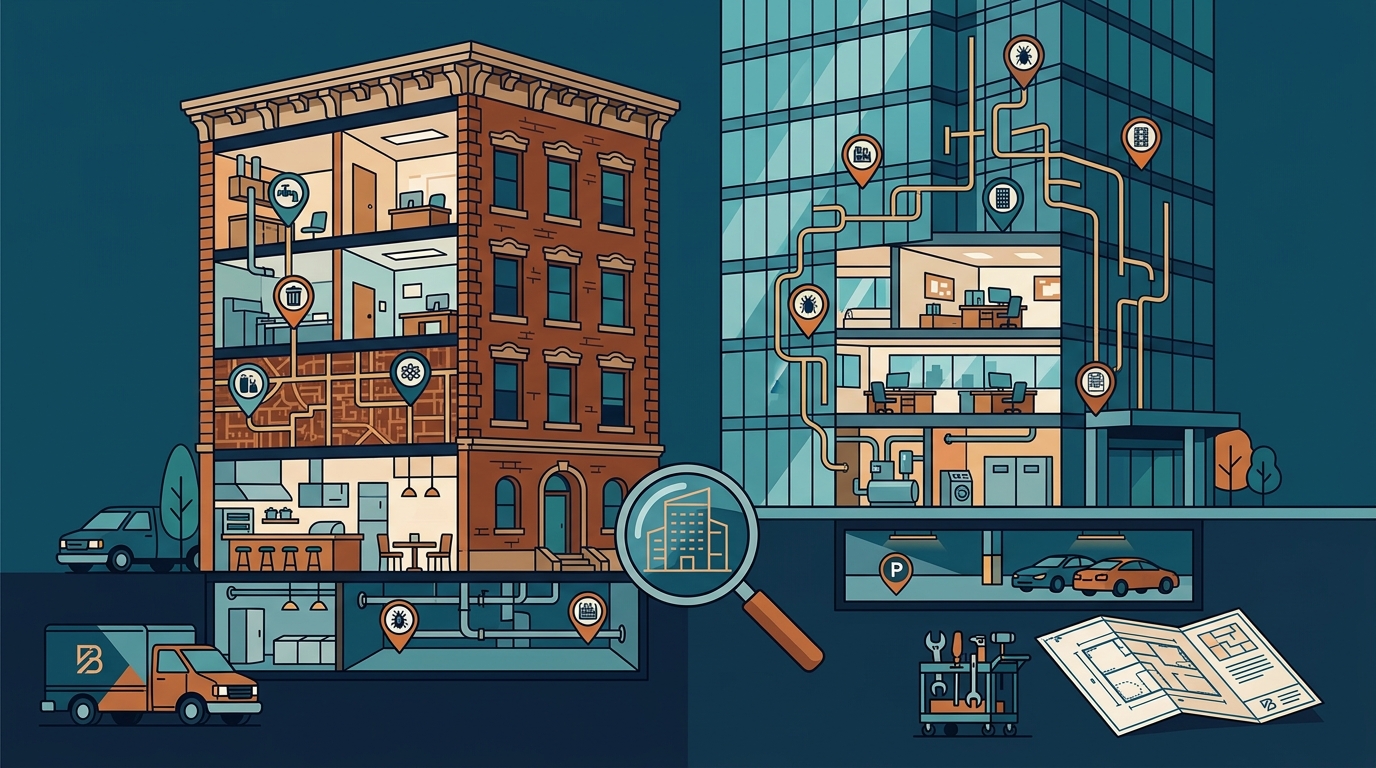
Not all buildings are created equal. A one-size-fits-all pest control plan is a recipe for failure. Property managers must categorize their assets by sector to apply the appropriate mitigation strategies. Broadway Pest Services identifies seven key commercial sectors, each with unique requirements.
Property Management and Residential
For property managers, the primary risks are HPD violations, tenant complaints, and DOB filings. Tenants in multi-family buildings often report pests when they feel their living conditions are compromised. A documented IPM program and service logs are essential to hold up in any proceeding. The goal is to prevent issues before they escalate to regulatory intervention.
Restaurants and DOH Compliance
A single DOH violation costs more than a year of pest control. Kitchen-safe IPM, same-day emergency response, and compliance records that protect your grade are non-negotiable. Restaurants operate under intense scrutiny, and any sign of pests can lead to immediate closure. The framework must include rigorous monitoring of food storage, waste management, and entry points.
Hotels and Hospitality
One bed bug review on TripAdvisor can cost thousands in RevPAR. Discreet detection, rapid response, and ongoing prevention protect your reputation. Hotels require a high level of discretion and speed. Guests expect a pest-free environment, and any breach can have long-lasting effects on booking rates and brand loyalty.
Food Processing and Warehousing
FDA, USDA, and FSMA compliance demands zero tolerance. Programs are built around AIB standards and unannounced audit readiness. Food processing facilities must maintain a sterile environment to ensure product safety. The pest control framework must include detailed mapping of pest activity and immediate corrective actions.
Office Buildings
Multi-tenant buildings require coordinated IPM that minimizes disruption across floors, management companies, and tenant leases. Office buildings present a challenge in balancing tenant comfort with effective pest management. Communication is key, as is the use of low-impact treatments that do not disturb daily operations.
Construction Sites
NYC DOB requires a Rodent Mitigation Plan before issuing permits for demolition and excavation projects. We build compliant plans and provide the on-site monitoring that keeps your project out of Stop Work Order territory. Construction sites are vulnerable to rodent infestations due to the availability of shelter and food. A proactive plan is required to avoid costly delays.
Healthcare and Education
Clinics, medical offices, nursing homes, schools, and daycares require low-chemical IPM that satisfies NYS Ed Law 409-h, Local Law 55, and accreditation survey standards. These environments are sensitive to chemical exposure. The framework must prioritize non-toxic methods and rigorous documentation to satisfy regulatory bodies.
IPM as a Compliance Tool
Integrated Pest Management is the cornerstone of any successful coverage framework. IPM is a systematic approach to managing pests that combines biological, cultural, physical, and chemical tools in a way that minimizes economic, health, and environmental risks. In NYC, compliance is not optional. Property managers must ensure that their pest control strategies align with local laws and regulations.
DOH Compliant strategies involve regular inspections, monitoring, and documentation. HPD Ready protocols ensure that buildings meet the housing quality standards set by the Department of Housing Preservation and Development. By adopting an IPM approach, property managers can demonstrate due diligence and protect their assets from regulatory penalties.
Furthermore, IPM helps in reducing the reliance on chemical pesticides. This is not only better for the environment but also for the health of tenants and employees. Low-chemical IPM is particularly important in sensitive environments such as healthcare facilities and schools. The goal is to manage pests effectively while minimizing harm to non-target organisms.
Technology and Documentation
In the digital age, documentation is as important as the treatment itself. 100% Digital service documentation ensures that property managers have real-time access to pest control data. This transparency allows for better decision-making and accountability.
24/7 Service Logs provide a continuous record of pest activity and treatment responses. This is crucial for identifying trends and addressing issues before they become major problems. Same-Day Response capabilities ensure that emergencies are handled promptly, minimizing the impact on tenants and operations.
The use of technology extends to the fleet as well. NYC's greenest pest control fleet includes hybrid and electric vehicles, which reduce the carbon footprint of pest control operations. This aligns with the growing demand for sustainable business practices in the commercial real estate sector.
Choosing the Right Partner
Selecting a pest control provider is a strategic decision. Property managers should look for a partner that understands the unique challenges of NYC commercial properties. Independence is a key factor. In an industry increasingly shaped by private equity rollups and cost-cutting, Broadway remains independently owned and operated. This ensures that the same technicians, standards, and accountability are maintained without the interference of outside investors.
QualityPro Certification and MWBE Certification are indicators of a provider's commitment to quality and diversity. DOH & HPD Ready status ensures that the provider is prepared to handle regulatory inspections. IPM Certified technicians are trained in the latest pest management techniques.
When evaluating potential partners, consider their response time, documentation capabilities, and sector-specific expertise. A provider that offers a Free Assessment can help identify specific vulnerabilities in your portfolio and propose a tailored solution.
Key Takeaways
- Regulatory Risk: A single DOH violation can cost more than a year of pest control services, making proactive management essential.
- Sector Specificity: Different commercial sectors face unique pest pressures and regulatory requirements, necessitating tailored IPM programs.
- Documentation: 100% Digital service logs and 24/7 service logs are critical for compliance and accountability.
- Independence: Broadway Pest Services has been independently owned since 1970, ensuring consistent standards and accountability.
- Response Time: Emergency response times of less than 4 hours are crucial for minimizing damage in high-risk sectors.
- Green Fleet: The use of hybrid and electric vehicles, including an all-electric Arcimoto, reduces environmental impact.
- Compliance: DOH Compliant and HPD Ready protocols are non-negotiable for NYC property managers.
Frequently Asked Questions
What is Integrated Pest Management (IPM)?
Integrated Pest Management is a comprehensive approach to pest control that focuses on long-term prevention and mitigation of pests through a combination of techniques such as biological control, habitat manipulation, modification of human behavior, and use of resistant varieties.
Why is documentation important in pest control?
Documentation is crucial for regulatory compliance, accountability, and identifying trends. 100% Digital service logs provide real-time access to pest control data, allowing property managers to make informed decisions.
How does Broadway Pest Services ensure compliance?
Broadway Pest Services is DOH Compliant and HPD Ready, ensuring that all pest control activities meet the strict regulatory standards of New York City. They also provide detailed service logs and IPM programs.
What sectors does Broadway Pest Services cover?
Broadway Pest Services covers seven key commercial sectors: Property Management, Restaurants, Hotels, Food Processing, Office Buildings, Construction Sites, and Healthcare & Education.
Is Broadway Pest Services independently owned?
Yes, Broadway Pest Services has been independently owned and operated since 1970. This ensures that the same technicians, standards, and accountability are maintained without the interference of outside investors.
What is the emergency response time?
Broadway Pest Services offers an emergency response time of less than 4 hours, ensuring that critical pest issues are addressed promptly to minimize damage and disruption.
Does Broadway Pest Services use eco-friendly methods?
Yes, Broadway Pest Services utilizes a green fleet, including hybrid and electric vehicles, and employs low-chemical IPM strategies to minimize environmental impact.
Secure Your Portfolio
Protecting your NYC commercial property portfolio requires a strategic, proactive approach to pest control. By implementing a building-by-building coverage framework, you can mitigate regulatory risks, protect your assets, and ensure the safety of your tenants. Broadway Pest Services is ready to help you deploy a comprehensive IPM program tailored to your specific needs.
Don't wait for a violation to act. Deploy a Free Assessment today and secure the future of your property. Contact us at (212) 663-2100 to discuss your pest control requirements.