

Choosing the best commercial pest control service for NYC property managers requires a partner that combines rigorous Integrated Pest Management (IPM) with strict regulatory compliance. Broadway Pest Services provides this exact framework, ensuring your buildings remain protected, documented, and legally defensible. This guide covers the essential criteria for selecting a commercial pest control provider in New York City, focusing on IPM programs, compliance documentation, licensed technicians, rapid response, bed bug management, and exclusion services.
IPM Programs
Integrated Pest Management is a systematic approach to pest control that prioritizes prevention, monitoring, and non-chemical interventions before resorting to pesticides. For NYC property managers, IPM is not just a best practice; it is a legal requirement under Local Law 55 of 2018. This law mandates that building owners use IPM practices rather than routine pesticide application. A robust IPM program begins with a comprehensive facility risk assessment. Technicians map receiving docks, production zones, storage areas, and utility corridors to identify specific risk zones. This mapping allows for the strategic placement of monitoring stations and baiting systems. By understanding the specific pest pressure in your building, a provider can tailor a program that addresses the root causes of infestations rather than just treating the symptoms.
Prevention and Monitoring
Prevention is the cornerstone of any effective IPM strategy. This involves sealing entry points, managing waste, and eliminating moisture sources that attract pests. Monitoring is equally critical. It requires the use of traps and bait stations to track pest activity over time. Data from these monitoring tools helps identify trends and predict potential outbreaks. For example, an increase in rodent activity in a specific area can trigger targeted intervention before a full-blown infestation occurs. Broadway Pest Services builds IPM programs around these principles, ensuring that every action is documented and justified.
Non-Chemical Controls
Non-chemical controls are the first line of defense in an IPM program. These methods include physical exclusion, sanitation, and habitat modification. Physical exclusion involves sealing gaps and cracks in the building envelope to prevent pests from entering. Sanitation focuses on eliminating food and water sources that sustain pest populations. Habitat modification involves altering the environment to make it less attractive to pests. By prioritizing non-chemical controls, property managers can reduce their reliance on pesticides, minimize health risks to tenants, and lower long-term treatment costs.
NYC Compliance Documentation
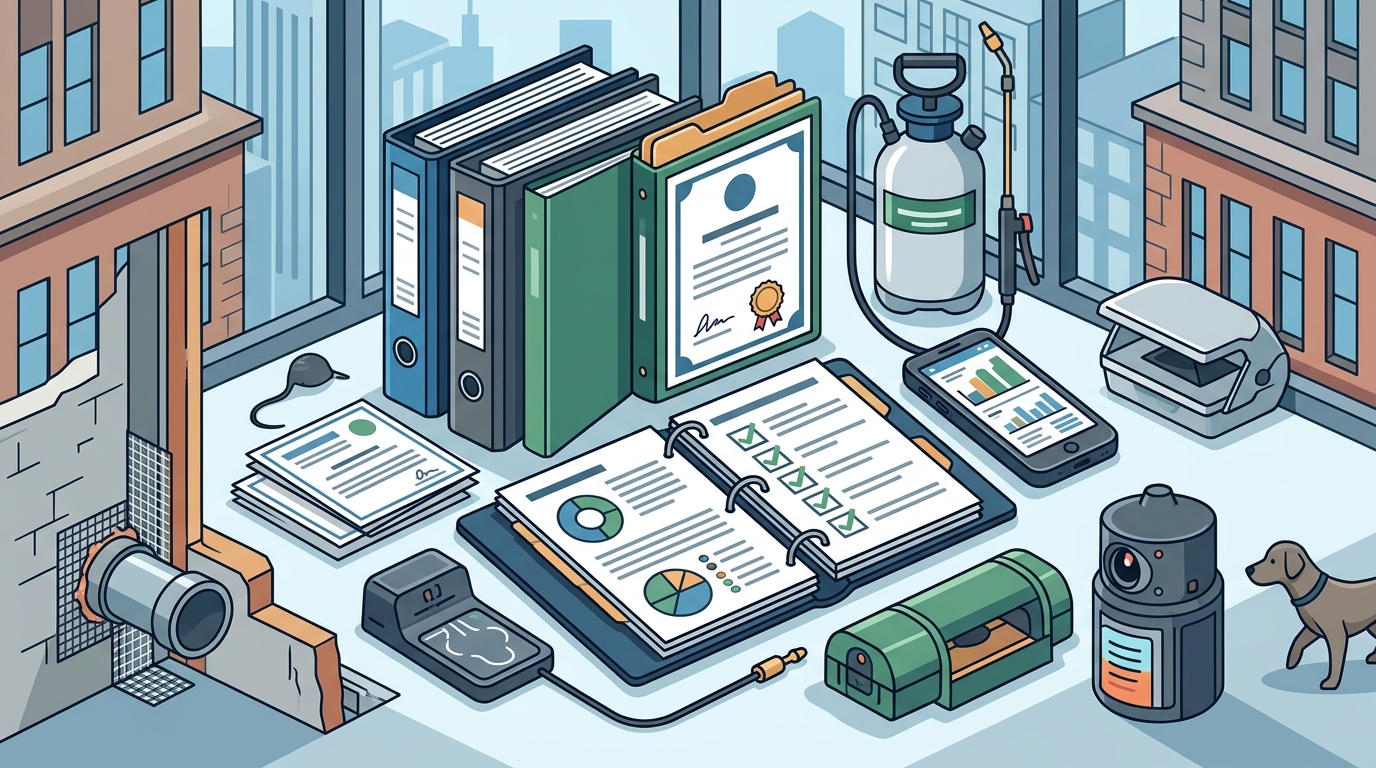
NYC compliance documentation is the written record of all pest control activities performed in a building. This documentation is essential for demonstrating compliance with local, state, and federal regulations. In New York City, property managers face scrutiny from multiple agencies, including the Department of Housing Preservation and Development (HPD) and the Department of Health (DOH). Each agency has specific requirements for pest control documentation. For instance, HPD requires proof of corrective action for pest violations, while DOH mandates detailed records for food service establishments. A reliable pest control provider must generate documentation that satisfies all relevant regulatory bodies. This includes service logs, inspection reports, and corrective action plans. Broadway Pest Services provides a 24/7 client portal where all documentation is accessible. This ensures that property managers can retrieve records instantly when needed for inspections or legal proceedings.
HPD Violation Defense
HPD pest violations are a significant concern for residential property managers. Class B violations require correction within 30 days, while Class C violations must be addressed within 24 hours. To clear a violation, property managers must document the treatment and certify correction through the HPD Online portal. Detailed service logs from a professional pest control provider are crucial for this process. These logs should include the date and time of service, the technician's license number, the areas treated, and the products used. This level of detail provides a strong defense in housing court if a violation is contested.
DOH Grade Protection
For commercial properties with food service tenants, DOH compliance is paramount. A single live cockroach sighting can result in a 28-point deduction, potentially lowering a restaurant's grade from A to C. This public posting can significantly impact customer traffic and revenue. Pre-inspection treatments and detailed documentation can help protect a tenant's grade. Broadway Pest Services offers emergency response services that can be deployed before a scheduled inspection. The resulting documentation serves as proof of active IPM engagement, which can be a mitigating factor during grading.
Licensed Technicians
Licensed technicians are the backbone of any professional pest control service. In New York State, pest control operators must hold a valid license from the Department of Environmental Conservation (DEC). This license ensures that the technician has completed the required training and passed a comprehensive exam. For property managers, working with licensed technicians is not just a legal requirement; it is a risk management strategy. Licensed technicians are trained in safe pesticide application, IPM principles, and regulatory compliance. They understand the specific challenges of NYC buildings, from aging infrastructure to dense urban environments. Broadway Pest Services employs only licensed technicians who undergo continuous training to stay current with the latest pest control technologies and regulations.
Specialized Training
Beyond basic licensing, specialized training is essential for handling complex pest issues. For example, bed bug control requires specific knowledge of the insect's biology and behavior. Similarly, rodent exclusion demands expertise in building construction and entry point identification. Providers that invest in specialized training for their technicians are better equipped to deliver effective and lasting results. Broadway Pest Services' technicians are trained in a wide range of specialties, including bed bug heat treatment, rodent exclusion, and commercial IPM. This depth of expertise ensures that property managers receive high-quality service regardless of the pest issue.
Accountability and Insurance
Licensed technicians are also more accountable for their work. They are bound by professional standards and are covered by liability insurance. This protects property managers from potential damages or injuries resulting from pest control activities. When selecting a pest control provider, verify that all technicians are licensed and that the company carries adequate insurance coverage. This due diligence helps mitigate risk and ensures that you are working with a reputable and responsible partner.
Same Day Response
Same day response is a critical capability for commercial pest control services in NYC. Pest issues can escalate rapidly, especially in dense urban environments. A single bed bug complaint from a hotel guest or a rodent sighting in a restaurant can have immediate financial and reputational consequences. A provider that can dispatch a technician the same day can contain the issue before it spreads. Broadway Pest Services offers same-day response across all five boroughs. By calling before noon, property managers can secure a same-day dispatch. This rapid response capability is particularly valuable for emergency situations, such as active infestations or impending regulatory inspections.
Emergency Scenarios
Emergency scenarios require a provider that can prioritize dispatch regardless of schedule. Common emergency scenarios include DOH inspections scheduled for the next day, HPD violations received that day, and active hotel guest complaints. In these situations, every hour counts. A provider that can respond quickly and effectively can prevent minor issues from becoming major crises. Broadway Pest Services' emergency protocol ensures that senior technicians are dispatched for these high-priority calls. These technicians have extensive experience handling emergency situations and know exactly what inspectors look for.
Logistical Advantages
Logistical advantages play a significant role in same-day response capability. Providers with multiple dispatch locations can cover a wider area more efficiently. Broadway Pest Services operates from two Manhattan locations, allowing for rapid deployment across the city. This logistical setup reduces travel time and ensures that technicians can reach your property quickly. When evaluating a pest control provider, consider their dispatch infrastructure and how it supports rapid response in your specific area.
Bed Bug Management
Bed bug management is a specialized discipline that requires a multi-faceted approach. Bed bugs are highly resilient and can survive for months without feeding. They are also excellent hitchhikers, spreading through luggage, furniture, and clothing. For NYC property managers, bed bugs represent a significant threat to reputation and revenue. A single verified complaint on a review platform can lead to a substantial drop in bookings. Effective bed bug management involves inspection, treatment, and prevention. Broadway Pest Services uses a four-phase protocol for bed bug control. This protocol includes professional inspection, heat and chemical combination treatment, timestamped documentation, and scheduled follow-up inspections.
Inspection and Detection
Professional inspection is the first step in bed bug management. Technicians inspect affected units, adjacent rooms, and common areas to determine the full extent of the infestation. Early detection is crucial for containing the spread. Providers that use advanced detection tools, such as pheromone traps and thermal imaging, can identify infestations before they become visible. Broadway Pest Services' technicians are trained in thorough inspection techniques, ensuring that no hiding spots are missed.
Treatment Methods
Heat treatment is one of the most effective methods for eliminating bed bugs. Temperatures above 120 degrees Fahrenheit kill all life stages, including eggs. Chemical barriers can also be used to prevent re-entry. A combination of heat and chemical treatment often yields the best results. Broadway Pest Services employs this combined approach, ensuring that the infestation is fully eradicated. All treatments are documented with timestamps and room numbers, providing a clear record of the work performed.
Exclusion Services
Exclusion services are a critical component of long-term pest control. Exclusion involves sealing entry points to prevent pests from entering the building. In NYC's aging building stock, gaps around pipes, door thresholds, and foundation cracks are common entry points. Without proper exclusion, even the most effective treatment will be temporary. Pests will simply re-enter the building. Broadway Pest Services provides comprehensive exclusion services, including sealing gaps, installing door sweeps, and repairing damaged screens. This proactive approach addresses the root cause of pest entry, reducing the need for repeated treatments.
Building Envelope Integrity
Building envelope integrity is essential for effective exclusion. Property managers should conduct regular inspections of the building exterior to identify potential entry points. This includes checking for cracks in the foundation, gaps around windows and doors, and damaged roofing. Addressing these issues not only prevents pest entry but also improves energy efficiency and structural integrity. Broadway Pest Services' technicians are trained to identify and address these issues during routine service visits.
Perimeter Treatment
Perimeter treatment is another key element of exclusion. This involves applying barriers around the building's exterior to deter pests. For rodents, this may include bait stations and snap traps. For insects, it may involve residual insecticides. Perimeter treatment creates a defensive line that prevents pests from entering the building. Broadway Pest Services integrates perimeter treatment into its IPM programs, ensuring that buildings are protected from the outside in.
Key Takeaways
- Integrated Pest Management is a legal requirement in NYC under Local Law 55 and should be the foundation of your pest control strategy.
- Comprehensive documentation is essential for defending against HPD violations and protecting DOH grades.
- Working with licensed technicians ensures safe, effective, and legally compliant pest control.
- Same-day response capability is critical for managing emergency pest situations in NYC.
- Bed bug management requires a multi-faceted approach including inspection, heat treatment, and prevention.
- Exclusion services address the root cause of pest entry by sealing gaps and cracks in the building envelope.
- Choose a provider with a strong local presence and logistical infrastructure to ensure rapid response.
- Regular monitoring and data analysis help predict and prevent pest outbreaks.
Frequently Asked Questions
What is the difference between IPM and traditional pest control?
IPM is a systematic approach that prioritizes prevention and non-chemical controls, while traditional pest control often relies on routine pesticide application. IPM is required by law in NYC for most buildings.
How do I clear an HPD pest violation?
To clear an HPD violation, you must address the pest condition, document the treatment, and certify correction through the HPD Online portal. Detailed service logs from a professional provider are crucial for this process.
Are licensed technicians required for commercial pest control in NYC?
Yes, all pest control operators in New York State must hold a valid DEC license. This ensures they are trained in safe pesticide application and regulatory compliance.
What is the fastest way to get a pest control response in NYC?
Providers with multiple dispatch locations and same-day response capabilities can offer the fastest service. Broadway Pest Services offers same-day dispatch across all five boroughs.
How effective is heat treatment for bed bugs?
Heat treatment is highly effective for eliminating bed bugs, as it kills all life stages including eggs. Temperatures above 120 degrees Fahrenheit are required for complete eradication.
Why is exclusion important for pest control?
Exclusion prevents pests from entering the building by sealing entry points. Without exclusion, pests will re-enter after treatment, making the problem temporary.
How often should I schedule pest control inspections?
Inspection frequency depends on the building's specific pest pressure and risk profile. Most commercial properties benefit from monthly or quarterly inspections. A provider can recommend a schedule based on a facility risk assessment.
What documentation should I keep for pest control compliance?
You should keep service logs, inspection reports, corrective action plans, and product Safety Data Sheets. This documentation is essential for demonstrating compliance with local, state, and federal regulations.
Conclusion
Selecting the best commercial pest control service for NYC property managers requires a partner that delivers on all fronts: IPM expertise, compliance documentation, licensed technicians, rapid response, and specialized treatment capabilities. Broadway Pest Services has been serving NYC's most demanding commercial clients since 1970. We understand the unique challenges of New York City's buildings and regulatory environment. To protect your property, your tenants, and your reputation, contact Broadway Pest Services for a free commercial assessment.