

Step-by-Step Rodent Prevention Protocol for NYC Restaurant Kitchens
Restaurants in New York City face a unique set of operational challenges that extend far beyond culinary excellence. One of the most critical threats to your business is a rodent infestation. A single incident can lead to immediate closure by the Department of Health and Mental Hygiene (DOH), severe reputational damage, and substantial financial penalties. According to recent industry data, pest-related violations account for a significant percentage of health code failures in dense urban environments. This guide provides a comprehensive, step-by-step rodent prevention protocol designed specifically for NYC commercial kitchens.
Understanding the NYC Rodent Threat
Rodents are not merely a nuisance; they are a regulatory and public health emergency. In New York City, the density of the urban environment creates a constant pressure on commercial properties. Rats and mice can squeeze through openings as small as a quarter and a dime, respectively. They are attracted to the warmth, food sources, and shelter that restaurants provide.
IPM, or Integrated Pest Management, is the industry-standard approach to pest control. IPM is a comprehensive strategy that focuses on long-term prevention of pests through a combination of techniques such as inspection, identification, and monitoring. Unlike traditional pest control, which relies heavily on chemical treatments, IPM emphasizes exclusion and sanitation. For NYC restaurants, this means building a physical and operational barrier against pests before they ever enter your kitchen.
The stakes are incredibly high. A DOH violation for rodent activity can result in a mandatory closure until the issue is resolved. This not only halts revenue but also damages your brand's reputation. Trust is hard to earn and easy to lose in the hospitality industry. Broadway Pest Services has been protecting NYC commercial clients since 1970, providing the tactical pest control needed to keep kitchens safe and compliant.
Step 1: Exterior Perimeter Defense
The first line of defense is your building's exterior. Rodents typically enter from the outside, seeking shelter and food. Your goal is to make your property uninviting and inaccessible to them.
Seal All Entry Points
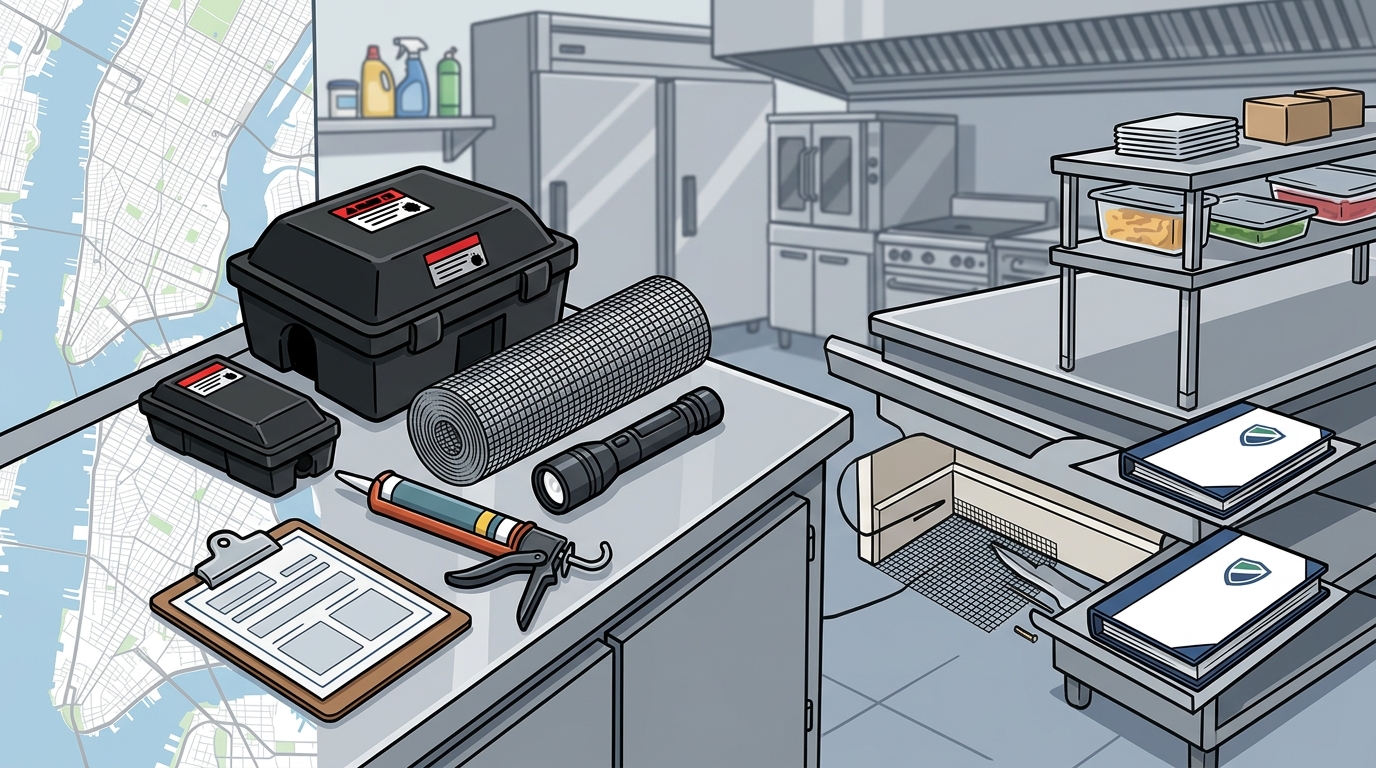
Conduct a thorough inspection of your building's exterior. Look for gaps around pipes, vents, utility lines, and foundation cracks. Use steel wool, copper mesh, or concrete to seal these openings. Rodents can chew through wood, plastic, and even soft metals, so only use materials they cannot easily penetrate. Professional pest control services can perform a detailed exclusion audit to identify hidden entry points.
Manage Landscaping and Debris
Keep vegetation trimmed back from your building. Rodents use overhanging branches and vines as bridges to access rooftops and upper floors. Remove any debris, such as leaves or wood piles, from around the foundation. This eliminates potential nesting sites and reduces the likelihood of rodents wandering close to your entrance.
Secure Delivery Areas
Delivery doors are common entry points. Install door sweeps and weather stripping to ensure a tight seal when doors are closed. Keep these areas well-lit, as rodents prefer darkness. Regular inspections of delivery zones are essential to maintain security.
Step 2: Interior Exclusion Techniques
Once inside, rodents can cause significant damage quickly. Your kitchen must be designed and maintained to prevent their movement.
Inspect and Seal Interior Gaps
Check around sinks, stoves, and refrigerators for gaps. Use caulk or steel wool to seal any openings. Pay special attention to areas where pipes enter walls or floors. These are common pathways for rodents to move between floors or into your kitchen.
Install Rodent Proofing on Vents and Drains
Ensure that all vents are covered with fine mesh wire. Rodents can enter through large drain pipes, so install rodent-proof drain covers. These devices allow water to flow freely but prevent pests from entering. Consult our FAQ for more details on specific products and installation methods.
Secure Storage Areas
Store all food items in rodent-proof containers. Cardboard boxes are easily chewed through and should be avoided. Use plastic or metal containers with tight-fitting lids. Keep storage areas off the floor and away from walls to allow for inspection and cleaning.
Step 3: Sanitation and Waste Management
Sanitation is the most critical component of rodent prevention. Without food sources, rodents are less likely to stay in your kitchen.
Implement Strict Cleaning Schedules
Clean your kitchen daily, focusing on areas where food debris accumulates. This includes under equipment, behind refrigerators, and in corners. Use degreasers to remove grease buildup, which can attract pests. Restaurant-specific cleaning protocols should be documented and enforced.
Manage Waste Effectively
Take out the trash regularly and ensure that trash cans are tightly sealed. Use heavy-duty liners and keep waste areas clean. Outdoor dumpsters should be placed away from the building and cleaned frequently to prevent odors that attract rodents.
Eliminate Water Sources
Rodents need water to survive. Fix any leaks immediately and ensure that sinks and drains are dry when not in use. Standing water in mop buckets or cleaning supplies should be avoided.
Step 4: Monitoring and Detection Systems
Early detection is key to preventing a full-blown infestation. You need a system to identify rodent activity before it becomes visible.
Install Monitoring Stations
Place monitoring stations along walls and in corners where rodents are likely to travel. Use tamper-resistant bait stations for outdoor areas and non-toxic monitoring traps indoors. Professional monitoring services can help you determine the optimal placement of these devices.
Conduct Regular Inspections
Perform weekly inspections of your kitchen and storage areas. Look for signs of rodent activity, such as droppings, gnaw marks, or grease trails. Document your findings and address any issues immediately.
Use Technology for Detection
Consider using electronic monitoring devices that alert you to rodent activity in real-time. These devices can provide early warnings and help you respond quickly to potential threats.
Step 5: Staff Training and Accountability
Your staff is your first line of defense. They need to be trained to recognize and report signs of rodent activity.
Develop a Training Program
Create a comprehensive training program that covers rodent prevention, sanitation, and reporting procedures. Ensure that all staff members understand their roles in maintaining a pest-free kitchen.
Encourage Reporting
Establish a culture where staff feel comfortable reporting any signs of pests. Make it clear that early reporting is critical to preventing larger issues.
Regular Refresher Courses
Conduct regular refresher courses to keep pest prevention top of mind. Update your protocols as needed based on new regulations or industry best practices.
Key Takeaways
- Exclusion is Critical: Seal all entry points with rodent-proof materials like steel wool and concrete.
- Sanitation is Key: Implement strict cleaning schedules and manage waste effectively to eliminate food sources.
- Monitoring is Essential: Use monitoring stations and regular inspections to detect activity early.
- Staff Training Matters: Train your staff to recognize and report signs of rodent activity.
- Professional Support: Partner with a reputable pest control provider like Broadway Pest Services for expert guidance and support.
- Compliance is Mandatory: Adhere to NYC DOH regulations to avoid violations and closures.
- IPM Strategy: Use an Integrated Pest Management approach for long-term prevention.
Frequently Asked Questions
How often should I inspect my kitchen for rodents?
You should conduct weekly inspections of your kitchen and storage areas. Look for signs of droppings, gnaw marks, or grease trails.
What materials should I use to seal entry points?
Use steel wool, copper mesh, or concrete to seal gaps. Rodents can chew through wood, plastic, and soft metals.
How can I prevent rodents from entering through drains?
Install rodent-proof drain covers that allow water to flow but prevent pests from entering.
What should I do if I find signs of rodents?
Contact a professional pest control service immediately. Do not attempt to handle the issue yourself, as this can lead to further problems.
Is IPM effective for restaurant kitchens?
Yes, IPM is the industry standard for pest control in commercial kitchens. It focuses on prevention and exclusion rather than just chemical treatments.
How does Broadway Pest Services help with rodent prevention?
Broadway Pest Services provides comprehensive IPM programs, including exclusion, monitoring, and sanitation guidance, tailored to NYC restaurants.
What are the consequences of a rodent violation in NYC?
A rodent violation can result in a mandatory closure, fines, and reputational damage. It is critical to prevent infestations before they occur.
Secure Your Kitchen Today
Protect your restaurant from the devastating impact of rodent infestations with Broadway Pest Services. Our team of experts provides tailored IPM programs that keep your kitchen compliant and pest-free. Contact us today to schedule a free assessment and secure your business.