
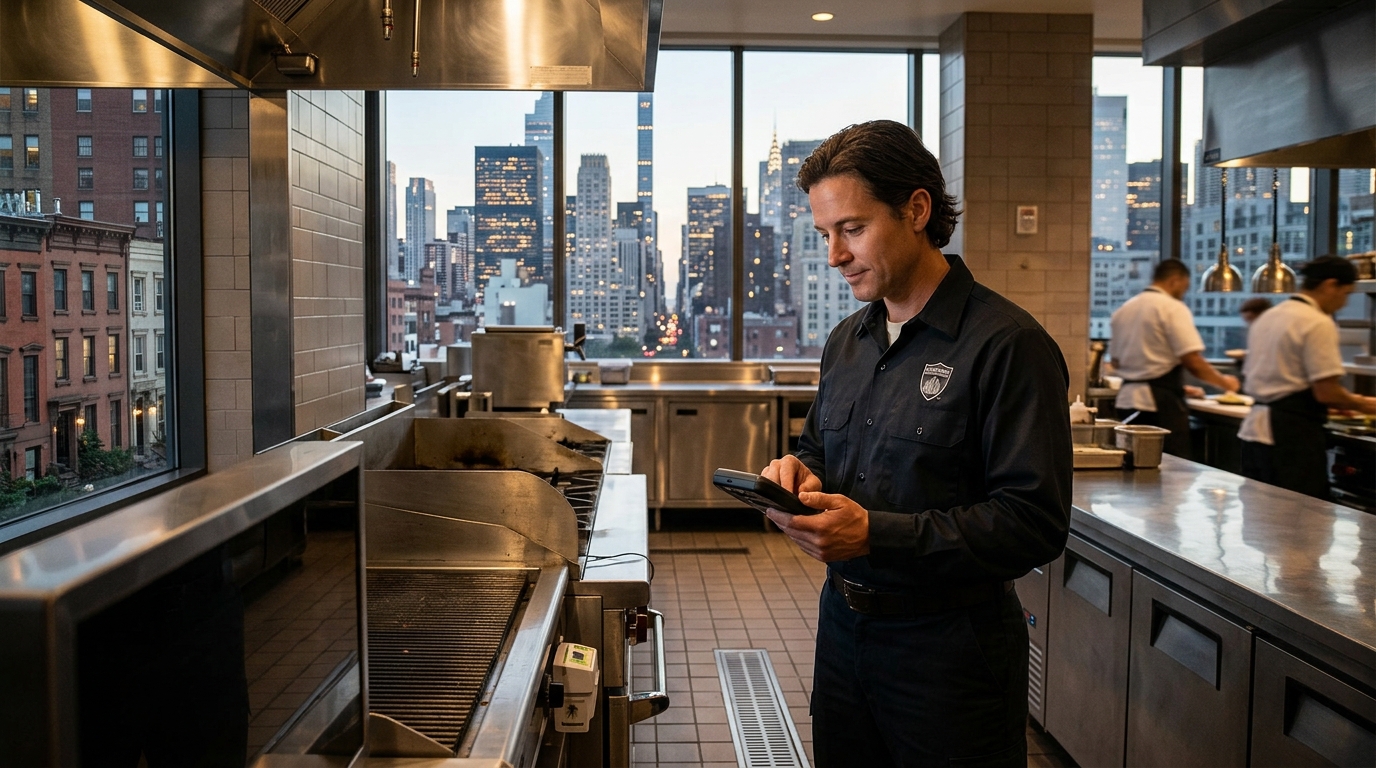
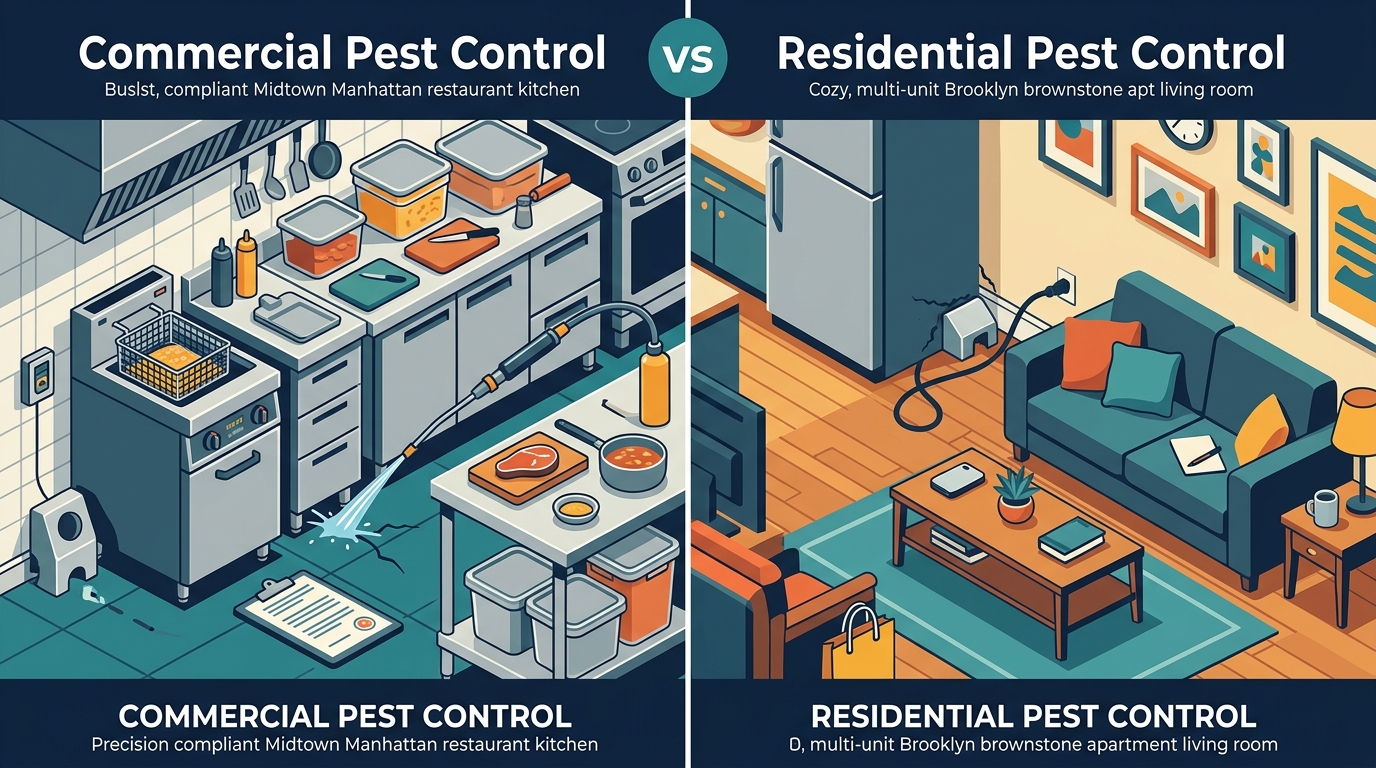
Pest management in New York City is not a one-size-fits-all operation. The regulatory stakes, operational timelines, and technical requirements for a Midtown Manhattan restaurant differ drastically from those of a Brooklyn brownstone. According to recent industry data, commercial properties face significantly higher compliance burdens, with DOH violations costing businesses thousands of dollars annually compared to standard residential remediation costs. Understanding these distinctions is critical for property managers, business owners, and homeowners alike.
Regulatory Framework Differences
The primary differentiator between commercial and residential pest control in NYC is the regulatory environment. Commercial entities operate under a microscope of public health codes that do not apply to private residences.
DOH and HPD Compliance
For commercial clients, particularly in the food service and hospitality sectors, compliance is not optional. A single Department of Health (DOH) violation can result in fines, temporary closure, or a downgrade in health grade. NYC DOH regulations mandate strict documentation of all pest management activities. In contrast, residential pest control is governed by local housing codes and landlord-tenant laws, focusing more on habitability than public health auditing.
FDA and FSMA Standards
Food processing and manufacturing facilities must adhere to federal standards set by the FDA and the Food Safety Modernization Act (FSMA). These regulations require zero-tolerance policies for pests and detailed Integrated Pest Management (IPM) records. Residential properties have no such federal oversight, allowing for more flexible, less documented treatment approaches.
Operational Response & Logistics
The logistics of pest control deployment vary significantly between the two sectors. Commercial operations often require after-hours service to avoid disrupting business activities, while residential clients may have more flexibility but also more immediate urgency due to health concerns.
Emergency Response Times
Commercial clients, especially in hospitality, cannot afford downtime. A bed bug outbreak in a hotel can devastate revenue and reputation. TripAdvisor reviews show that negative pest-related feedback can lead to a significant drop in bookings. Therefore, commercial pest control providers often guarantee same-day or rapid emergency response. Residential services, while still urgent, typically operate on standard scheduling windows.
Documentation and Reporting
Commercial pest control requires comprehensive digital service logs that can be presented during audits or legal proceedings. These logs must detail every chemical used, every trap placed, and every action taken. Residential reports are generally simpler, focusing on treatment summaries and future prevention advice. Broadway Pest Services provides 24/7 digital service documentation for commercial clients to ensure audit readiness.
Service Methodologies & IPM
Integrated Pest Management (IPM) is the gold standard for both sectors, but its application differs. IPM is a holistic approach to pest control that focuses on long-term prevention and minimal use of pesticides.
Commercial IPM Strategies
In commercial settings, IPM is highly structured. It involves regular site inspections, identification of entry points, and implementation of exclusion techniques. For example, construction sites require a Rodent Mitigation Plan to comply with NYC Department of Buildings (DOB) requirements before permits are issued. This proactive approach is essential for maintaining compliance and preventing costly stop-work orders.
Residential IPM Strategies
Residential IPM focuses on educating homeowners about sanitation and exclusion. It involves identifying common entry points in older buildings, such as gaps around pipes or windows, and sealing them. The goal is to create an environment that is inhospitable to pests without relying heavily on chemical treatments. IPM certification ensures that technicians are trained in these low-chemical methods.
Cost Analysis & ROI
Understanding the cost structure of pest control is vital for budgeting. Commercial services are typically priced based on the complexity of the facility, the frequency of visits, and the specific pests involved.
Commercial Pricing Models
Commercial pest control often involves monthly or quarterly service contracts. These contracts include regular inspections, treatments, and reporting. The cost is justified by the risk mitigation it provides. A single DOH violation can cost more than a year of pest control services. Contract sales teams can provide detailed quotes based on specific business needs.
Residential Pricing Models
Residential pest control is often priced per visit or as an annual plan. The cost varies based on the type of pest and the size of the property. While the upfront cost may be lower than commercial services, the lack of comprehensive documentation and compliance support can lead to higher long-term costs if infestations recur.
Sector-Specific Needs
Different commercial sectors have unique pest control challenges. Understanding these needs is crucial for selecting the right provider.
| Sector | Primary Pest Threats | Key Regulatory Focus | Service Requirement |
|---|---|---|---|
| Property Management | Rodents, Cockroaches | HPD Violations, Tenant Complaints | Documented IPM Programs |
| Restaurants | Flies, Rodents, Cockroaches | DOH Health Grade, FDA Standards | Same-Day Emergency Response |
| Hotels | Bed Bugs, Roaches | Online Reputation, RevPAR | Discreet Detection |
| Food Processing | Rodents, Insects | AIB Standards, FSMA Compliance | Audit-Ready Documentation |
Key Takeaways
- Regulatory Burden: Commercial pest control is heavily regulated by DOH, HPD, and FDA standards, requiring strict documentation and compliance.
- Response Time: Commercial clients often require same-day emergency response to protect revenue and reputation, whereas residential services follow standard scheduling.
- IPM Application: Commercial IPM is structured around audit readiness and exclusion, while residential IPM focuses on homeowner education and basic exclusion.
- Cost Justification: The cost of commercial pest control is justified by the high cost of violations and business disruption, making it a critical operational expense.
- Independence Matters: Broadway Pest Services has been independently owned since 1970, ensuring consistent service standards without the pressure of private equity rollups.
- Green Fleet: Broadway utilizes a unique green fleet, including an all-electric Arcimoto and VW ID Buzz, for rapid and eco-friendly urban deployment.
- Comprehensive Coverage: Services cover all five NYC boroughs, Westchester, and Bergen County, providing localized expertise across the region.
Frequently Asked Questions
What is the main difference between commercial and residential pest control?
The main difference is the regulatory framework. Commercial pest control must adhere to strict DOH, HPD, and FDA regulations, requiring detailed documentation and compliance reporting. Residential pest control focuses more on habitability and tenant comfort with less regulatory oversight.
How quickly can commercial pest control respond to an emergency?
Commercial pest control providers often guarantee same-day or rapid emergency response, especially for critical sectors like hospitality and food service. This is essential to minimize business disruption and protect reputation.
Why is Integrated Pest Management (IPM) important for commercial clients?
IPM is crucial for commercial clients because it provides a long-term, sustainable solution to pest problems while minimizing the use of chemicals. It also ensures compliance with regulatory standards and audit requirements.
Does Broadway Pest Services offer services for residential properties?
Yes, Broadway Pest Services offers comprehensive pest control solutions for both commercial and residential clients. Their independent ownership since 1970 ensures consistent quality and accountability across all service areas.
What types of pests are most common in NYC commercial properties?
Cockroaches, rodents, and bed bugs are the most common pests in NYC commercial properties. Each sector faces unique challenges, from DOH violations in restaurants to reputation damage in hotels.
How does Broadway Pest Services ensure compliance for commercial clients?
Broadway Pest Services provides 24/7 digital service documentation, IPM-certified technicians, and DOH/HPD-ready protocols to ensure that commercial clients remain compliant and audit-ready at all times.
What areas does Broadway Pest Services cover?
Broadway Pest Services covers all five NYC boroughs, Westchester County, and Bergen County, NJ. They also have a retail store in Harlem for professional-grade products.
Secure Your Property Today
Whether you manage a high-rise in Manhattan or a restaurant in Brooklyn, the right pest control partner is essential. Broadway Pest Services offers independent, expert pest control tailored to your specific needs. Deploy a Free Assessment today to protect your property and reputation.