
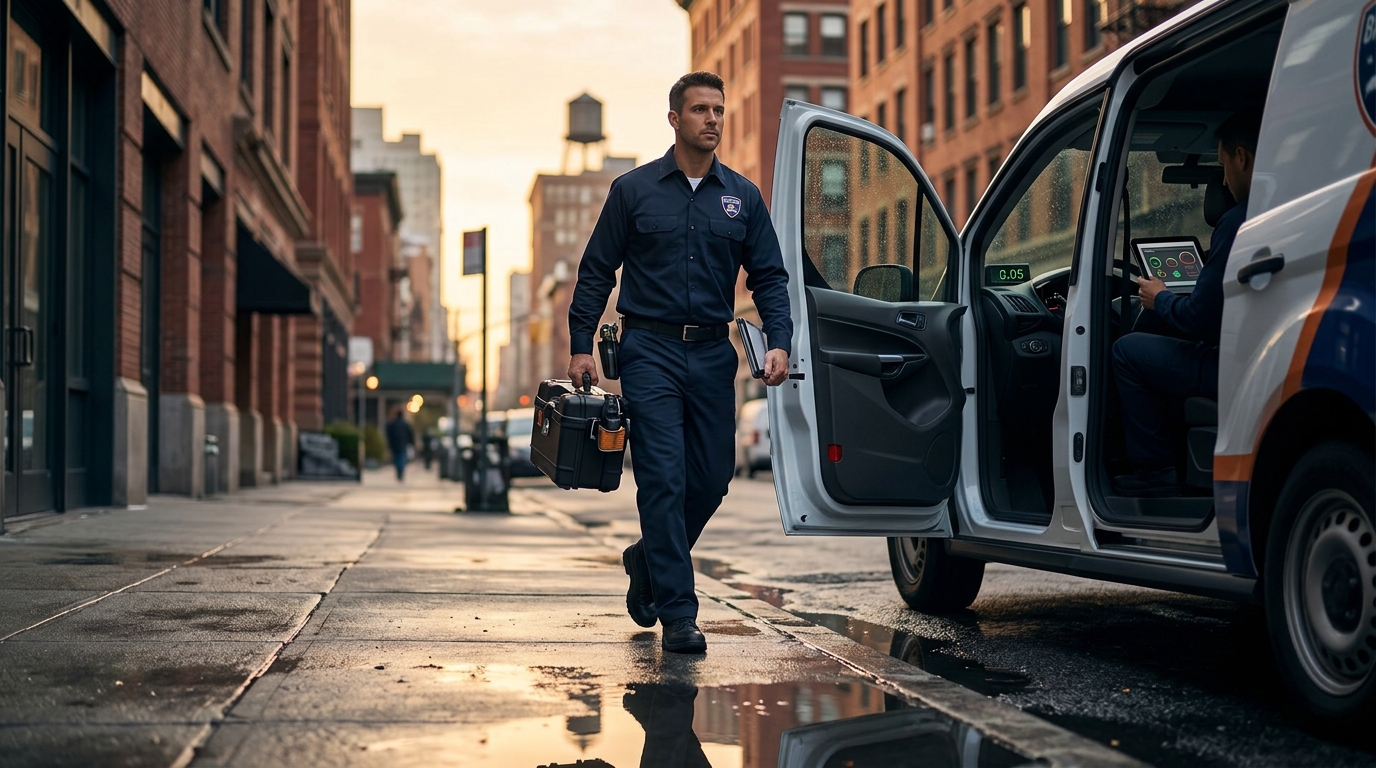
How Fast Can a Pest Control Company Respond Before a Scheduled Health Inspection?
Commercial pest control companies in New York City can typically dispatch a technician within 4 to 24 hours, depending on the urgency and the provider's operational model. For Broadway Pest Services, same-day response is available for clients who call before noon, ensuring that critical pre-inspection treatments are completed before a Department of Health (DOH) or Department of Housing Preservation and Development (HPD) inspector arrives. This guide covers the operational realities of emergency pest response, the specific regulatory windows in NYC, and how to build a defensible documentation trail that protects your business license and reputation.
Emergency Response Times
Response time is the single most critical factor in pre-inspection pest control. In a dense urban environment like New York City, the distance between a dispatch center and a commercial property can vary significantly. However, established commercial providers operate on a tiered response model. For Broadway Pest Services, the standard for true emergencies is a same-day dispatch. If a client calls before noon, a technician is deployed to the site the same day. This rapid deployment is essential because a pest sighting is not just a cleanliness issue; it is a compliance event.
Same-Day Dispatch Mechanics
Same-day service relies on local dispatch hubs. Broadway Pest Services operates from two Manhattan locations: Midtown at 213 W 35th St and South Harlem at 69 St. Nicholas Ave. This dual-hub model allows the company to reach any Manhattan neighborhood within a short window. For properties in the five boroughs, Westchester, or Bergen County, response times may extend to 24 hours, but the documentation and treatment protocols remain identical. The goal is to treat the infestation and generate a dated service log before the inspector's arrival.
Escalation for Critical Deadlines
When a DOH inspection is scheduled for the next morning, or an HPD violation notice has just been received, the response protocol escalates. In these scenarios, the provider prioritizes the dispatch regardless of the time of day. The technician's primary objective is not just to kill pests, but to perform a targeted treatment that addresses the specific areas inspectors are trained to check, such as drains, floor edges, and food storage units.
NYC Regulatory Windows and Inspection Triggers
Understanding the regulatory clock is as important as the pest control clock. In New York City, the Department of Health and Mental Hygiene (DOHMH) and the Department of Housing Preservation and Development (HPD) operate under distinct but overlapping frameworks. DOH inspections for food service establishments are unannounced and occur at least once per year. HPD inspections are often triggered by tenant complaints filed through 311. Knowing these triggers helps property managers anticipate when a response is needed.
DOH Inspection and Re-Inspection Windows
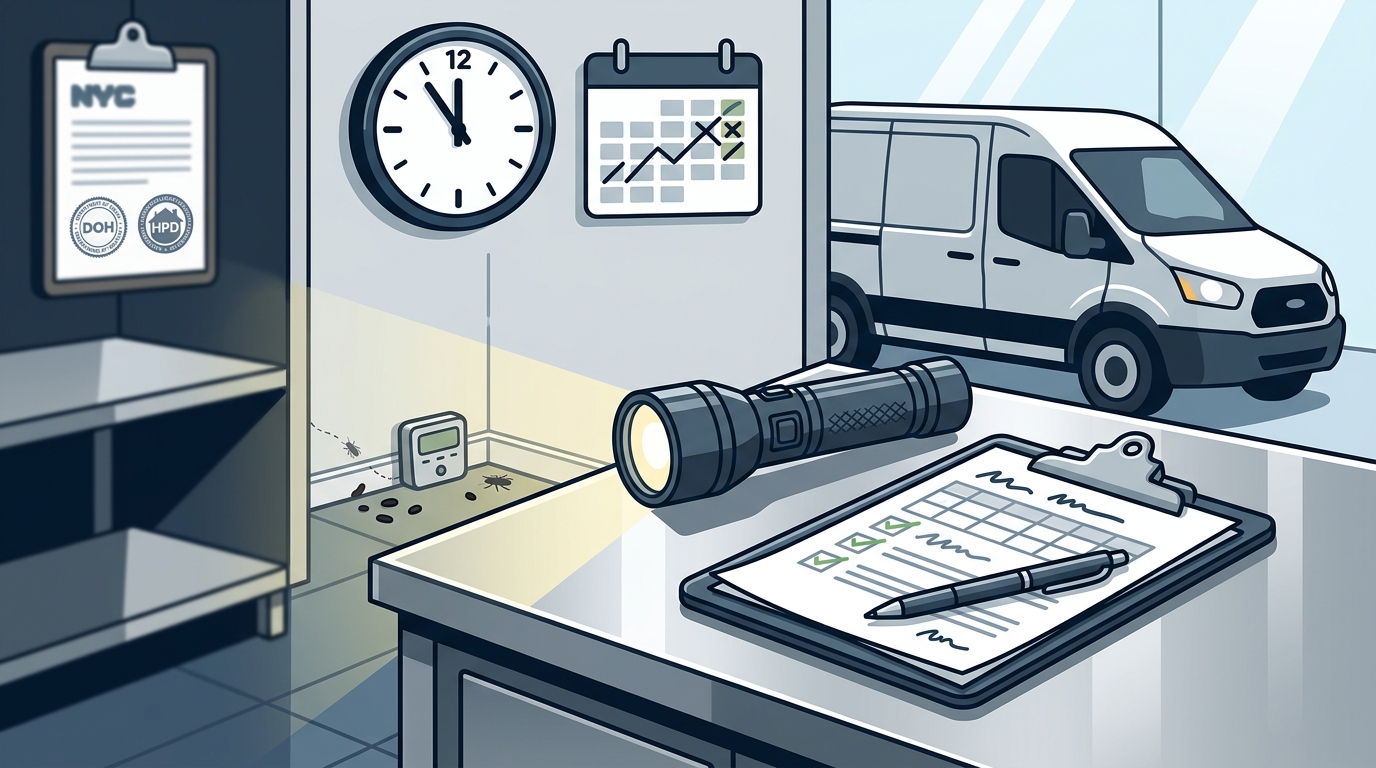
DOH inspections score violations on a point system. A single live cockroach in a food area can cost 28 points, which immediately drops a restaurant's grade from A to C. If a business receives a B or C grade, it has the right to request a re-inspection within 48 hours. This 48-hour window is the most critical recovery period. If the re-inspection results in an A, the business can post the A grade. Having a pest control provider on call for emergency pre-inspection treatment is essential to utilizing this window effectively.
HPD Violation Correction Periods
HPD classifies pest violations as Class B (hazardous) violations. These violations require correction within 30 days. However, the date of the first response matters significantly in housing court proceedings. If a property manager receives a violation notice, calling a pest control company the same day to dispatch a technician creates a dated record of immediate corrective action. This record serves as the foundation of a legal defense if the violation is contested at the Office of Administrative Trials and Hearings (OATH).
Documentation as Legal Defense
In the event of a violation, the presence of pests is often a fact that cannot be disputed. However, the response to those pests is where the legal defense lies. Documentation is the product of professional pest control. A professional service generates a timestamped digital log for every visit. This log includes the date, time, technician license number, areas inspected, activity observed, treatments applied, and the next scheduled visit. This level of detail is what satisfies inspectors and judges.
The Role of the 24/7 Client Portal
Modern pest control providers use digital portals to store these logs. Broadway Pest Services provides a 24/7 client portal where all service records are accessible. When an inspector arrives, or when a tenant files a complaint, the property manager can pull up the documentation on a phone or tablet. This immediate access to records demonstrates active management and compliance, which can lead to fine reductions or dismissals at OATH.
IPM Documentation Standards
Integrated Pest Management (IPM) is the standard expected by NYC agencies. IPM focuses on finding why pests are present, fixing those conditions, and using targeted treatments. Documentation of an IPM program includes inspection schedules, exclusion work (sealing cracks), sanitation support, and monitoring data. This comprehensive record shows that the property is not relying on reactive sprays but is maintaining a proactive, year-round system.
Common Pre-Inspection Pest Emergencies
Certain pests trigger immediate regulatory action. Knowing which pests are most likely to cause a shutdown allows for prioritized response. Cockroaches and rodents are the primary concerns for DOH and HPD inspectors. Bed bugs are a major concern for hospitality and residential properties, often leading to reputation damage and tenant complaints.
Cockroach and Rodent Red Flags
For restaurants, a single roach in the dining room is a red flag. Inspectors look for live insects, droppings, gnaw marks, and harborage areas. If roaches are seen during the day, or if there are roaches of different sizes (nymphs and adults), it indicates an established population. For rodents, fresh droppings and grease rub marks along walls are critical signs. These issues require immediate treatment to prevent a violation.
Bed Bug Complaints in Hospitality
In hotels, a bed bug complaint from a guest is a 4-hour problem, not a next-day problem. A verified complaint on a review platform can trigger a significant drop in booking rates. Broadway Pest Services dispatches discreetly to inspect the room and adjacent units, treating if necessary and providing written clearance documentation before the next check-in. This rapid response prevents a single complaint from becoming a public crisis.
Building a Pre-Inspection Protocol
Waiting for an emergency is a risky strategy. A robust pre-inspection protocol involves regular monitoring and proactive treatment. This approach ensures that when an inspection does occur, the property is already in a compliant state. The protocol should include scheduled inspections, exclusion work, and continuous monitoring.
Scheduled IPM Inspections
Regular inspections on a set schedule (e.g., monthly or quarterly) allow technicians to identify early signs of pest activity before it becomes visible. This proactive approach is the core of IPM. It also builds a history of compliance that can be presented to inspectors. For Broadway Pest Services, this means detailed logs of every visit, showing consistent engagement with pest management.
Exclusion and Sanitation Support
Treatment alone is not enough. Exclusion work, such as sealing gaps around pipes and doors, prevents pests from entering. Sanitation support, including proper garbage handling and food storage, removes the attractants that bring pests in. These non-chemical controls are a key part of a defensible IPM program and are documented in the service logs.
Key Takeaways
- Same-day response is available for commercial clients in NYC who call before noon, ensuring treatment before an inspection.
- DOH re-inspections must be requested within 48 hours of a B or C grade, making rapid pest control essential.
- HPD Class B pest violations require correction within 30 days, but immediate response strengthens legal defense.
- Timestamped digital service logs are the primary legal defense against pest-related fines and violations.
- Integrated Pest Management (IPM) documentation, including exclusion and sanitation records, satisfies NYC regulatory standards.
- Bed bug complaints in hotels require response within 4 hours to prevent reputation damage and review crises.
- Proactive, scheduled inspections are more effective than reactive treatments for maintaining compliance.
- Broadway Pest Services operates from two Manhattan hubs to provide rapid dispatch across the five boroughs and surrounding areas.
Frequently Asked Questions
How fast can a pest control company respond in NYC?
Broadway Pest Services offers same-day dispatch for clients who call before noon. For true emergencies, such as a DOH inspection the next day, the response is prioritized regardless of the time.
What is the DOH re-inspection window?
If a restaurant receives a B or C grade from the NYC Department of Health, it has 48 hours to request a re-inspection. If the re-inspection results in an A, the business can post the A grade.
How long does HPD give to correct a pest violation?
HPD Class B pest violations require correction within 30 days. However, the date of the first response is critical for legal defense in housing court.
What documentation is needed to defend a pest violation?
Active IPM documentation, including regularly scheduled service logs, inspection reports, and corrective action records, significantly increases the chance of fine reduction or dismissal at OATH.
How quickly should a hotel respond to a bed bug complaint?
A bed bug complaint in a hotel should be responded to within 4 hours. This includes inspection, treatment if necessary, and written clearance documentation before the next guest check-in.
Does Broadway Pest Services serve areas outside Manhattan?
Yes, Broadway Pest Services covers all five NYC boroughs, Southern Westchester County, Bergen County NJ, and Nassau County, with same-day response available for many locations.
What is Integrated Pest Management (IPM)?
IPM is a standard approach that focuses on finding why pests are present, fixing those conditions, and using targeted treatments. It includes inspections, exclusion, sanitation, and monitoring.
Can I access my pest control service logs online?
Yes, Broadway Pest Services provides a 24/7 client portal where all service logs, inspection reports, and compliance documentation are accessible at any time.
Conclusion
Speed is a critical component of pest control compliance in New York City. The ability to respond within hours, rather than days, can mean the difference between a passing inspection and a costly violation. Broadway Pest Services provides the operational infrastructure, regulatory expertise, and documentation standards required to protect your business. By leveraging same-day dispatch and a 24/7 client portal, you can ensure that your property is always inspection-ready. To secure your compliance status, contact Broadway Pest Services for a free assessment and same-day response.