
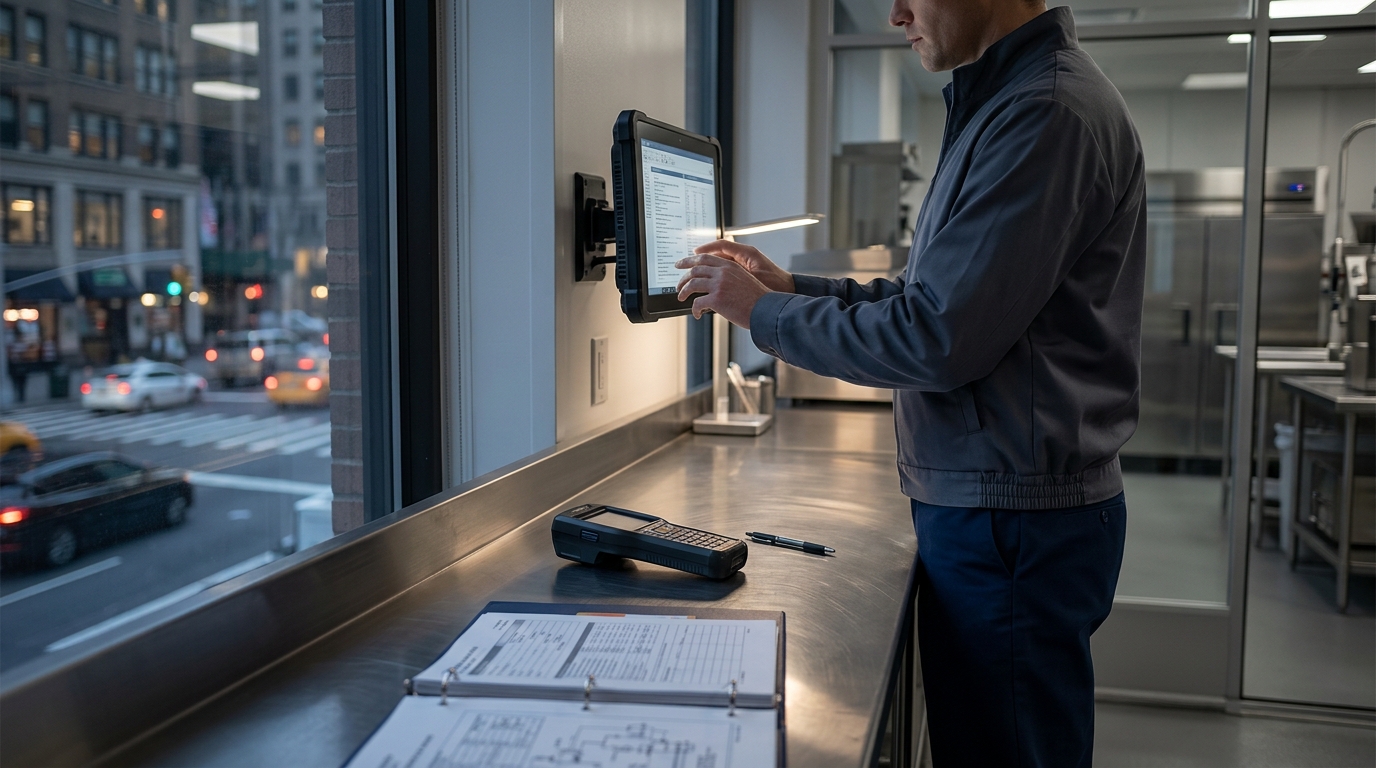
Food safety audits are no longer just about checking boxes; they are about proving operational integrity through irrefutable data. In the high-stakes world of food manufacturing and processing, a single gap in pest activity documentation can trigger a major non-conformance. According to recent industry compliance reports, over 40% of SQF and BRC Level 1 non-conformities are linked to inadequate pest management records. This statistic highlights a critical vulnerability in many food safety plans. The difference between a flawless audit and a costly failure often lies in the precision of your pest activity findings. This guide details the exact documentation protocol required to satisfy SQF Edition 9 and BRCGS Food Safety Issue 9 standards.
Understanding SQF and BRC Requirements
SQF (Safe Quality Food) and BRCGS (Brand Reputation through Compliance of Global Standards) are the two most recognized food safety certification schemes globally. Both require a robust Pest Management Plan (PMP) that is not only implemented but meticulously documented. The auditor's primary concern is traceability. They need to see a clear line of sight from the initial pest sighting to the corrective action taken and the final verification of effectiveness.
SQF Edition 9, specifically clause 2.5.4, mandates that pest activity is monitored and recorded. BRCGS Issue 9, clause 4.12.3, requires that pest control activities are documented and reviewed. The key word in both standards is "review." Documentation is not a passive archive; it is an active tool for trend analysis. If your records show consistent activity in Zone B, but your corrective actions were generic, the auditor will flag this as a failure to address root causes. Broadway Pest Services has supported commercial clients in navigating these exact requirements since 1970, ensuring that our clients remain audit-ready at all times. Explore our commercial pest control services to see how we align with these rigorous standards.
The IPM Foundation for Audits
Integrated Pest Management (IPM) is the industry standard for sustainable and compliant pest control. IPM is a systematic approach to managing pests by combining biological, cultural, physical, and chemical tools in a way that minimizes economic, health, and environmental risks. For audits, IPM is not just a methodology; it is the framework for your documentation.
Auditors look for evidence that your pest control provider is using IPM principles. This means your records should not just list "sprayed for ants." They should detail the inspection findings, the specific traps placed, the type of bait used, and the rationale behind the treatment. Broadway Pest Services is IPM Certified and ensures that every service log reflects this comprehensive approach. Learn more about our IPM certified methodology and how it protects your facility.
Step-by-Step Documentation Protocol
To pass an SQF or BRC audit, your pest activity documentation must follow a strict protocol. Each finding must be recorded with precision. Here is the step-by-step process for documenting pest activity findings.
Step 1: Initial Inspection and Mapping
Every audit begins with the map. Your facility must have a current, accurate pest control map. This map should show the location of all monitoring devices, including traps, bait stations, and light traps. Each device must have a unique ID number. When an auditor reviews your records, they will cross-reference the service log with this map. If a log entry references Trap #45, but Trap #45 is not on the map, this is a major non-conformance. Ensure your map is updated annually or whenever the facility layout changes. Broadway Pest Services provides detailed facility mapping as part of our initial assessment. View our service areas to see if we cover your location.
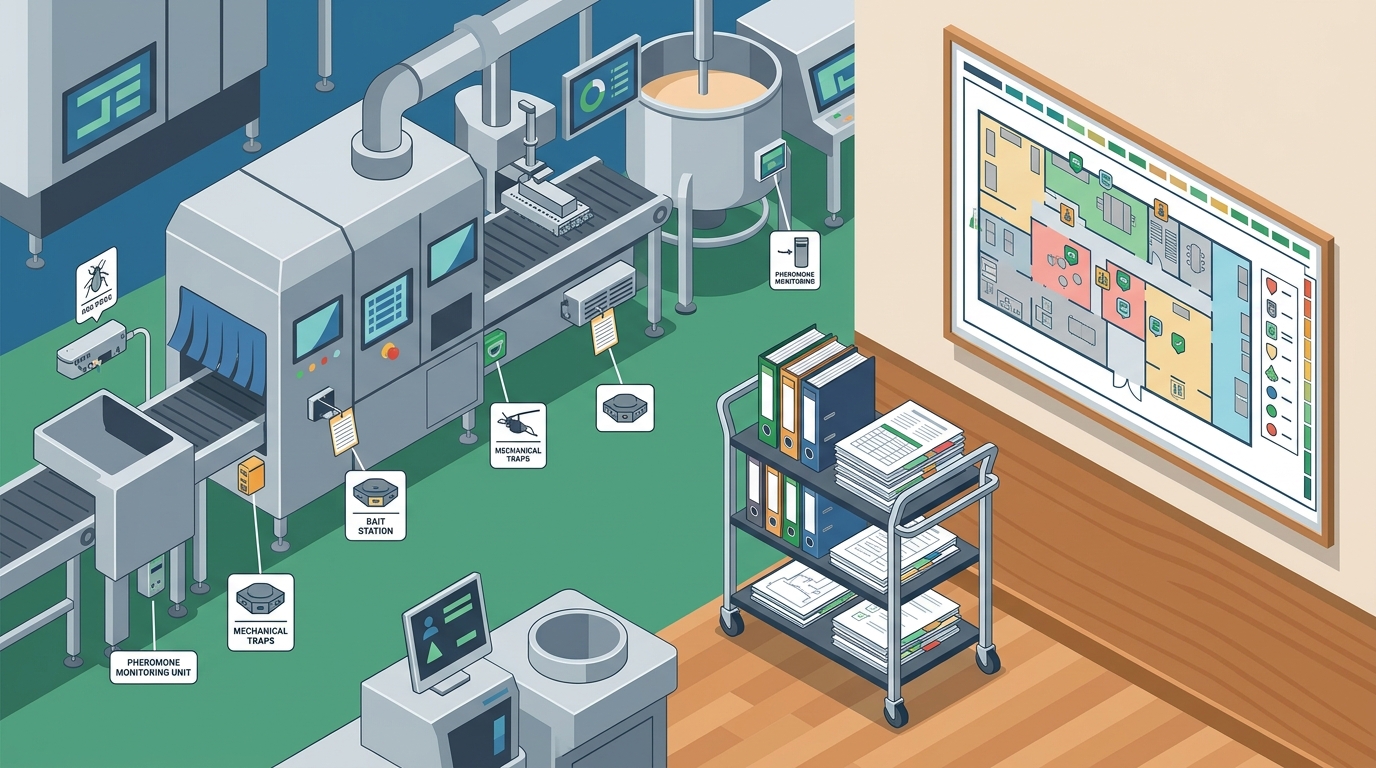
Step 2: Recording Activity Findings
When a technician visits your site, they must record every finding. This includes live pests, dead pests, droppings, gnaw marks, and even the absence of activity. The record must include the date, time, technician name, and the specific device ID. If activity is found, the technician must note the species, the quantity, and the location. For example, instead of writing "rodent activity," the record should state "1 live mouse found in bait station #12 near loading dock B." Specificity is key. Read our guide on rodent mitigation strategies for more details.
Step 3: Corrective Actions and Root Cause Analysis
Documentation is incomplete without corrective actions. If activity is detected, what was done? Was a trap reset? Was bait replaced? Was a seal repaired? The record must detail the action taken. Furthermore, for recurring activity, a root cause analysis is required. If you find the same species in the same location three times in a month, the documentation must reflect a deeper investigation. Did you find an entry point? Was the sanitation protocol adequate? Broadway Pest Services provides detailed corrective action reports for every finding. Contact our contract sales team to discuss your specific needs.
Step 4: Verification and Trend Analysis
The final step in the protocol is verification. This is where the "review" aspect of BRCGS and SQF comes into play. Management must review the pest activity logs regularly. This review should look for trends. Are there spikes in activity during certain seasons? Are certain zones consistently problematic? The documentation should reflect this analysis. If trends are identified, the pest control plan should be adjusted accordingly. This demonstrates to the auditor that you are proactive, not just reactive. Broadway Pest Services offers 24/7 service logs and digital reporting to facilitate this review process. Access our client portal for real-time data.
Digital vs. Paper Records
The format of your documentation is also a point of scrutiny. While paper records are acceptable, digital records are increasingly preferred for their accessibility and integrity. Digital records reduce the risk of loss, damage, or alteration. They also allow for easier trend analysis and reporting. Broadway Pest Services provides 100% digital service documentation, ensuring that your records are always available and accurate. Learn about the benefits of digital pest control records.
Advantages of Digital Documentation
- Real-Time Access: Auditors can review records on-site without waiting for physical files.
- Data Integrity: Digital records are harder to alter accidentally or maliciously.
- Trend Analysis: Software can automatically generate graphs and reports from raw data.
- Compliance Alerts: Systems can flag overdue services or recurring issues automatically.
Key Differences in Audit Readiness
| Feature | Paper Records | Digital Records |
|---|---|---|
| Accessibility | Low (Physical storage required) | High (Cloud-based access) |
| Searchability | Manual (Time-consuming) | Instant (Keyword search) |
| Backup | Manual (Risk of loss) | Automatic (Redundant storage) |
| Trend Analysis | Difficult (Manual calculation) | Easy (Automated reports) |
Common Audit Failures
Even with a good pest control provider, facilities can fail audits due to internal documentation errors. Here are some common pitfalls to avoid.
Inconsistent Mapping
If the facility map does not match the physical layout, auditors will question the accuracy of the entire pest control program. Ensure that any changes to the facility are immediately reflected in the map. Broadway Pest Services updates maps as part of our regular service visits. Learn about our commercial pest control process.
Lack of Corrective Action Detail
Writing "treated" is not enough. Auditors need to know what was treated and how. Vague entries suggest a lack of attention to detail. Ensure your provider provides detailed corrective action notes. Broadway Pest Services provides comprehensive service logs that leave no room for ambiguity. Read our compliance tips for food facilities.
Failure to Review
As mentioned, the review process is critical. If you have records but no evidence of management review, you are non-compliant. Implement a monthly review process and document it. This can be as simple as a signed and dated summary of the month's activity. Broadway Pest Services can help you set up this review process. Schedule a demo to see our reporting tools in action.
Key Takeaways
- Specificity is Mandatory: Vague entries like "activity found" are non-compliant. Use specific species, locations, and quantities.
- Map Accuracy is Critical: Your pest control map must match your physical facility exactly. Update it immediately after any changes.
- Review is Required: Both SQF and BRCGS require evidence of management review. Document your monthly reviews.
- Digital is Preferred: Digital records offer better integrity, accessibility, and trend analysis capabilities.
- Root Cause Analysis: Recurring activity requires a documented root cause analysis, not just a repeat of the same treatment.
- Independence Matters: Broadway Pest Services has been independently owned since 1970, ensuring consistent standards and accountability.
- Compliance is Proactive: Use your pest data to improve facility hygiene and structural integrity, not just to react to pests.
Frequently Asked Questions
What is the difference between SQF and BRC pest documentation?
While both require detailed records, SQF focuses heavily on the implementation of the pest control plan, while BRCGS emphasizes the review and trend analysis of that plan. Both require specific corrective actions for any activity found.
How often should pest activity logs be reviewed?
Management should review pest activity logs at least monthly. This review should identify trends and ensure that corrective actions are effective. Quarterly reviews are also recommended for a deeper analysis.
Can I use paper records for SQF and BRC audits?
Yes, paper records are acceptable if they are legible, complete, and securely stored. However, digital records are strongly recommended for their ease of access and analysis.
What should I do if I find pests during an audit?
Do not panic. Show the auditor your corrective action plan. Document the finding, the action taken, and the follow-up plan. Auditors are looking for a robust system, not perfection.
Does Broadway Pest Services provide digital records?
Yes, Broadway Pest Services provides 100% digital service documentation through our client portal, ensuring real-time access and comprehensive reporting.
How do I update my pest control map?
Your pest control provider should update the map whenever there are changes to the facility layout. Broadway Pest Services includes map updates in our regular service visits.
What is a root cause analysis in pest control?
A root cause analysis is a detailed investigation into why pests are recurring. It involves identifying entry points, sanitation issues, or structural defects that allow pests to enter.
Secure Your Compliance
Audits are a critical part of maintaining your food safety certification. By implementing a rigorous pest activity documentation protocol, you can ensure that your facility remains compliant and your reputation intact. Broadway Pest Services is here to help you navigate these requirements with confidence. Our independent, IPM-certified approach ensures that your pest control program is both effective and audit-ready. Deploy a free assessment today and see how we can support your food safety goals.